




 14 Mar
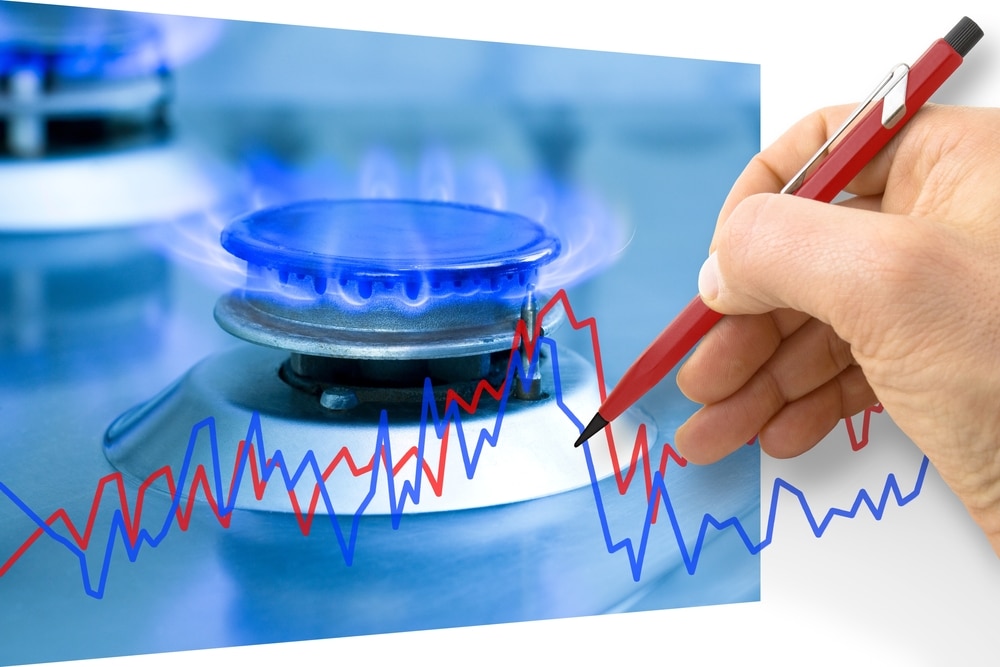
 Most business owners are familiar with how domestic gas contracts work, as they will have been domestic gas customers for years. But, when it comes to business gas contracts they may not be aware of the key differences.
In this guide, we will look at the differences between business gas and domestic gas, and how to make sure you are getting the cheapest business gas prices.
Is business energy more expensive than domestic energy?
A lot of business owners may be wondering if business energy is more expensive than domestic energy. This may seem like a simple question, but the answer is actually quite complex as there are a number of different factors that need to be taken into account.
Although the actual electricity and gas supplied to both business and domestic customers comes from the same suppliers and is delivered through the same pipes and cables, energy suppliers will offer different contracts to business customers than they do to domestic customers.
Domestic and non-domestic energy contracts operate in very different ways. Although domestic energy prices tend to grab more headlines, especially at the moment, it is important that business owners understand business energy contracts and supply so that they can ensure they are getting the best deal for their business.
Average business energy rates vs domestic energy rates
Electricity and gas rates can seem cheaper for business customers than domestic customers at first glance, but this is because business customers tend to use more energy over a shorter period of time. This means that commercial clients can negotiate with suppliers and choose the best contract for them based on their individual business needs. Domestic customers won’t be offered rates that are tailored to their personal needs, as they will just be charged the same rate as the rest of their region.
What are the pricing criteria for business gas customers?
Domestic customers are charged a set price for their gas based on their geographical location and payment method, whereas the pricing criteria for business gas customers take into account: Business type
Contract length
Credit score
Demand profile
Geographical location
Payment type
Finding the cheapest business gas prices can be a time-consuming task, and can get confusing at times. If you are wondering how to compare business gas prices then D-ENERGI is here to help. Our team of business energy experts will guide you through the business gas price comparison process and help you secure the best deal for you.
Read Article 28 Feb
 You can’t have failed to notice that there is currently an energy crisis in the UK, with business electricity and business gas prices set to rocket. Here’s what you need to know.
The energy price cap has helped to keep domestic energy rates low for the past few months, but this doesn’t apply to business energy, unfortunately. This is why there have been some wild variations in the business gas and business electricity prices that suppliers have quoted over recent weeks.
The reason why there have been recent price hikes for both business electricity and gas is due to the fact that wholesale energy prices are currently at record high levels. This is not a new situation, energy market prices are always moving up and down, but the price we are currently seeing are really high and also quite volatile, making it difficult to predict what they will be from one day to the next, never mind in twelve months’ time.
Why are wholesale energy prices so high at the moment?
The rise in energy prices is a global issue and it has been caused by some unexpected, but far-reaching reasons, including: A higher than usual demand for liquefied natural gas (LNG) from Asia has led to lower LNG availability for Europe
An increase in demand for energy in general as lockdown restrictions have eased across the globe
Delays and complications with the Nord Stream 2 pipelines, linking Russia to Europe and bypassing Ukraine
Gas shortages across Europe in general, thanks to the prolonged cold winter of 2020/2021 which put a drain of gas supplies
What is affecting the UK in particular?
These reasons have put us in a global energy crisis, but on top of this the UK itself is also suffering from: A fire at a National Grid site in Kent knocked out a power cable used to import electricity from France to the UK, which is not expected to be back up and running until 2023
Low winds mean less renewable energy generation
Outages at some Nuclear Power stations mean a higher percentage of gas being used for electricity production than normal
The fact that UK has some of the lowest gas reserves in the whole of Europe, so we have almost no way of stockpiling gas until we need it
With all of this in mind, what is the best way to make sure you are paying a fair price for your business energy?
Well, the best way to find the best business energy deals is to contact the expert team at D-ENERGi. We just need a couple of details from you and then we can trawl the business electricity and business gas suppliers UK to find the best tariff for your business in minutes.
Read Article 21 Feb
 Paying the cheapest business electricity rates UK is the dream for many UK business owners, as it not only gives them the best value for money but at a reasonable price too.
Business electricity is a crucial component of every business’s day-to-day operation, but it can be a very expensive component especially if you rely on many heavy machines on a day-to-day basis or have a lot of branches to run.
So, how do you go about finding the cheapest business electricity prices then?
One of the best ways to ensure you have the best business electricity deal for your particular business is to look at the offers from all of the business energy suppliers in the UK. Having said that, this can take a lot of time and effort in order to get all of the necessary data you need to be able to compare them all side by side effectively.
You will not only need to visit each individual website of the business electricity providers that you are interested in knowing more about, but you may also have to contact them as well if their rates are not clearly listed on site.
However, if you are clever, you will let someone else do all the hard work for you, i.e., the team at D-ENERGi!
We can do all of the research for you, and advise you on the best deals for you – taking into account many different factors. We can not only help you to cut a great deal with your chosen business electricity provider but we can also advise you on ways to reduce your energy consumption in your business in general as well.
D-ENERGi has become one of the longest established and well-respected independent energy solutions provide in the UK. We have worked with businesses of all sizes from small individual care homes to larger care home groups, and have experience in a wide range of other sectors as well. We help small, medium, and large businesses reduce their business energy costs by offering the most competitive business energy rates and prices in the UK.
If you are interested in finding out more about our business energy service and how we can connect you with the cheapest business electricity supplier, then please get in touch, either by the contact us form on our website or by calling 0800 781 7626.
Read Article 14 Feb
 If you are running a business, then you will want to be able to easily compare business electricity prices per kWh to ensure you are not paying too much – as this could have a huge impact on your bottom line. After all, business electricity and gas are essential utilities to keep your business going, but this doesn’t mean you should let your energy spending get out of control.
When it comes to comparing business gas or business electricity prices per kWh then you need to be aware of a few things before you commit to a certain provider and contract, including:
What are business electricity rates?
Different utility providers will have different ways they use to calculate your total business energy bill, and understanding these different ways will help you to decide which one is best for you and your particular business.
The three main rates are: Fixed-rate – this means you can expect a very similar electricity bill every month as your total consumption is being calculated at a constant rate throughout your contract.
Flexible rate – your rate will vary depending on market trends, and so some months may see you paying more for your energy than other months
Half hourly electricity – a smart meter is used to record your specific energy usage and send it to your energy supplier at half hourly points throughout the day.
Each of these rates has its pros and cons. The biggest benefit of a fixed rate, for example, is that you always know what your rate is, whether the business energy market fluctuates wildly or not. However, the other side of this is that if rates do drop below your fixed rate, you won’t benefit from any reduction in costs.
This is where the benefit of a flexible rate comes in as if utility costs drop so do your bills. However, on the flip side of this, your monthly payments will also go up if the cost of utilities goes up.
The benefit of half-hourly electricity is that you always know how much you are spending on business electricity and so can make adjustments to your usage quickly. However, it does also mean that your energy provider may decide to charge you higher rates at peak hours as well.
The easiest way to find out the best business rates for both gas and electricity is to contact the team at D-ENERGi. We can quickly compare business electricity and business gas prices per kwh – saving you both time and money.
Read Article 24 Jan
 From fridges and kettles to computers and printers, your business probably uses a wide variety of appliances on a daily basis. When you want to compare energy prices is it important to know which of these electrical appliances are the biggest drain on your electricity costs. So, let’s take a look at how D-ENERGi can help you bring your business electricity prices down – and improve your green credentials in the process.
Calculating the electric consumption of appliances
The simplest way to check how much electricity an appliance consumes is to look at its power rating – a label stating the number of watts (W) or kilowatts (kW) can usually be found on the back or base.
This number gives you the average electrical consumption of the item when it is in use, but to find out how much it will cost to run you need to know your business electricity rates per kWh. A kWh is a unit of electrical energy equivalent to the power consumption of 1000 W per hour.
So, if your business electricity rate per kWh is 12p and you run a 50W laptop for 8 hours it will cost you (50/1000) x 12 x 8 which is 4.8p a day.
Typical electrical appliances that use the most energy
Of course, the appliances that use the most energy in your workplace will depend on the type of equipment you use and how you use it, but the most common energy users include: Air Conditioners – 4000W
Desktop Computers – 100W
Fridges – 80W
Laptops – 50W
Lightbulbs – 60W
Photocopiers – 70W (when on standby)
Printers – 60W (when on standby)
Servers – 1000W
Does leaving electrical appliances plugged in use electricity?
It is important for business owners to realise that it isn’t a myth, many appliances will continue to consume electricity when they are left in standby mode. For example, if one member of staff leaves their laptop plugged in, even when it is fully charged, this could use around 4.5kW per week or 234 kWh a year – which can push your electricity bill right up.
For this reason, it is really important to remind employees to switch off their appliances at the main when they have finished using them – if possible. You could invest in some power strips for them so that they can turn everything off in one go – make it easy for them.
Easy ways to save electricity in the workplace
There are lots of simple things you and your employees can do to save electricity in the workplace including: Turning off appliances when not in use
Switch from traditional light bulbs to LED’s
Upgrade to an intelligent air conditioning, heating, and ventilation system
Switch to more efficient technology when replacing items
One of the best ways to save on your business energy bills, however, is to let the D-ENERGi team compare your business energy prices per kWh rates to make sure you are on the best deal for you.
Read Article 17 Jan
 It is a good idea for all businesses to keep an eye on their business energy suppliers and the rates they are charging to make sure you are getting access to the best deal possible. Completing a business energy comparison is therefore a time investment that will definitely pay you back – as many businesses the D-ENERGi team works with have reported considerable savings when they switch suppliers.
When you are looking at a business electricity or business gas comparison, however, it is prudent to keep a few things in mind:
#Always read the small print
It is essential you take the time to read every aspect of your commercial energy contract before you sign it as some contracts contain a specific window in which you are allowed to cancel or switch the contract without penalty.
You probably won’t ever be refused the opportunity to be let out of your contract if you do choose to switch business energy suppliers outside of this window – but you will potentially be liable for quite large costs, so you should think about your timing carefully.
#Be sure of your expectations
A lot of businesses state that their number one reason for switching business energy suppliers is to save money, which they do, to begin with only to find that their bills go up over time despite their energy usage not increasing.
Don’t ever take it as certain that you are guaranteed to save money throughout the length of your new business energy contract. Look at your energy usage and what you are paying for it at the start of your contract, and monitor it throughout the length of your contract so that you can be sure you are really saving the money you thought you would.
#Be patient
Don’t just plump for the first deal you are offered – take some time to consider it carefully. Remember, you are the one who is in control, so you should only move business energy suppliers when you are ready.
Get in contact with the D-ENERGi team, tell us your current circumstances and what you are looking for, and then leave the rest to us. We will contact the suppliers on your behalf and come back to you with some options – leaving you to decide which energy contract is the right one for you and your business.
If you want to complete a thorough business gas and business electricity comparison, then get in touch with the D-ENERGI team. We just need a couple of minutes of your time, and we can potentially save you money on your business energy bills.
Read Article
Get the Best Business Energy Quotes
Price Match Available: Our price matching team will provide you the most competitive business energy rates. We won’t just match your current energy quote – we’ll strive to beat it!
Join thousands of UK businesses that have already started saving on their business energy costs!
Sign Up For The Latest News and Insights on Market Trends
"*" indicates required fields