



 20 Oct
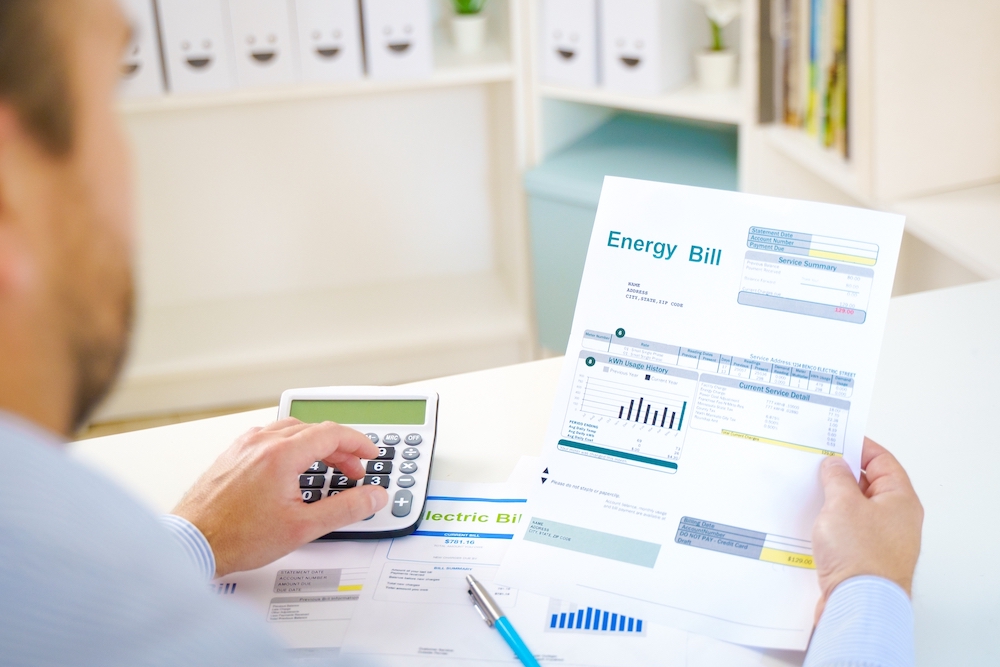
 Whenever you receive an energy bill, whether that is by post or via email, it may be tempting to put this to one side and ignore it. However, it is incredibly important to read your business energy bills when you receive them. This will help you to understand your energy usage and how your energy supplier has calculated your costs.
Our quick guide provides all the details you need to decipher your business energy bill and use this to your advantage.
How to break down your bill
Receiving a letter with numbers across the page, graphs and more, can make understanding your energy bill confusing. But, it doesn’t have to be. Being able to break down each section of your bill will simplify the information you have been provided. Bills will look slightly different, depending on who your supplier is. However, the majority of energy bills will display the following information in some format.
Your usage period – this will be a date range, indicating what period of time this bill is for. Usually this will be between several months.
The amount required – The total amount will be shown clearly on the page, this is the figure that you owe your energy supplier.
Your energy consumption – Your energy bill will typically display the amount of energy you have consumed during this period. This will be measured in kilowatt hours (kWh).
Your meter readings – If you were providing your energy supplier with regular meter readings during this period, they will display your actual meter readings. If this was not the case they will display their estimated meter readings based on previous energy consumption. Your meter serial number must also be shown here, so be sure to check this is correct.
A breakdown of your bill – this will usually be included in your bill to further explain the figure you owe.
When you first receive your bill, you should read it through thoroughly and identify each of these key sections. If there is anything missing or information that you do not believe to be accurate, it is important that you get in contact with your energy supplier who can further explain this. If the meter serial number shown on your bill is incorrect, you must identify this immediately and let your supplier know, as they could be retrieving data from the wrong meter and making poor estimations.
Read Article 13 Oct
 Setting up your utilities is an important step in the early stages of your business. By doing this early on, you will be able to conduct forecasting, allowing you to budget for the forthcoming year. If you have never owned or run your own business before, you may be slightly unsure as to how setting up business utilities will differ from your own personal utilities. In this guide we explain everything you need to know, so you can get started making money and growing your business.
Identify your necessary utilities
The first step in the process is quite simple, but will help you to prioritise which utilities you should be setting up first. For example, water, gas, and electricity, will be three of the most essential utilities you will need to set up before you can start running your business. Broadband and telephone connections will also be required to help get you connected to your customers or clients.
Choosing a business utilities supplier
Once you have identified your essential business utilities, now it is time to find suitable suppliers for each. There are some key things to bear in mind when finding the right utilities supplier for your business, these include: Your budget
Your projected usage
What payment options are available and which would suit you best
Check contract lengths How to pay the best rates for your business utilities
Some of the most common ways to find the cheapest rates for your business is to use price comparison sites or to access the information of a broker. Although, the point should be raised, those who opt to go through these third-party services must be cautious. Read all the information provided before agreeing to sign any contract and be sure you understand what you are signing up for.
With energy rates currently at an all time high, it may be useful to refer to information provided by Ofgem who is the government regulator for the electricity in Great Britain.
For water in the UK you will have to pay for any water that your business uses and the liquid waste produced from your premises. Ofwat is the regulator for the water sector in England and Wales.
D-ENERGi Business Energy
At D-Energi, we make it simple for businesses from a range of sectors to access competitive prices and rates for business energy in the UK. Our services include business electricity, business gas, business water, half hourly electricity and more. To get quotes for your new business, contact our friendly team today.
Read Article 26 Aug
 An energy price cap is a tool introduced by the independent regulatory authority, Ofgem. The tool has been put in place to protect consumers from rising energy prices. With the intention of restricting energy suppliers from making excessive profits. The recent announcement from Ofgem in April 2022, stated that the energy price cap on variable tariffs will increase by 54%. This explains why the majority of consumers will have noticed a rise in their energy prices. On average, for tariff customers, energy bills will increase by £693 to £1,971 per year. As this new increase takes hold, more and more customers are noticing the effect. The reason for this increase is as a result of wholesale gas shortages which has greatly impacted the energy suppliers’ ability to meet demand. Therefore, creating a need to pass on some of their increased costs.
While the price cap somewhat protects domestic consumers, this does not do anything to protect businesses. This means, that where they are experiencing an increase in wholesale costs, energy suppliers are passing the majority of this onto their business energy customers. With many businesses experiencing incredible rises to their business electricity and business gas bills, as well as receiving huge quotes for business energy, with some exceeding a huge 90p/kWh.
What should businesses do to manage the rising energy costs?
As the energy market continues to navigate a very volatile period of time, it is important to shield your business from rising energy prices for your business. For those businesses that are seeking a new energy supplier or need to secure a price due to being up for renewal, there are some solutions to consider.
One of the ways business owners can shield themselves and their businesses from the current market volatility is to consider working ahead of time of your existing renewal. This is to avoid the anticipated future price rises and great uncertainty of the current energy market as we go into the winter months.
Smarter procurement is one-way businesses can benefit from better energy rates. Instead of requesting quotes for immediate start dates, consider reviewing your tariff ahead of time.
In the current market we are finding that unit rates and standing charges of quotes with ASAP contract start dates are coming out the most expensive. In contrast to this, if the contract end date is much further away (e.g. 6 months or more), then we are finding we are able to access lower prices. Therefore organisations can benefit from locking in lower prices in advance now, than those they would end up with if they left their renewal to within a month of their end date.
Avoid out-of-contract pricing with any supplier
One of our top tips is to avoid running down your contracts in the hopes prices may fall. For those D-ENERGi customers who do this or have done this, you will go onto our Deemed Energy Tariff which is the most expensive option for business energy customers as it is influenced by the daily energy wholesale market fluctuations. For us at D-ENERGi, this means we could be paying more than 3 times as much on wholesale prices in comparison with our fixed price plans, and these costs will unfortunately have to be passed on to the customer. We cannot stress this enough; avoid at all costs running down your contracts if possible. For additional advice, do not hesitate to contact our helpful team who can support you in renewing your contract before it is too late. Whilst some experts are concerned that there could be a drop in prices resulting from users consuming much less energy thus creating an energy surplus, there has been no signs of this being the case over the past few months.
Monitoring your energy consumption
Energy consumption management is an important and valuable process that all businesses should practice. By monitoring your energy usage closely you will gain a greater understanding of your bills while allowing you to optimise and control the energy usage of your company.
To do this, it is as simple as enquiring about a business energy smart meter that will take automatic meter readings while providing you with real-time consumption data. At D-ENERGi we offer smart meters for businesses, available through our smart meter roll out.
For more information on the energy market and how to get the best tariff for your business energy, please contact our team.
Read Article 10 Aug
 In business, maximum import capacity refers to the highest level of energy that a business can bring in from an outside source. This information can be used by businesses to manage their energy prices and understand how much they need to bring in to cover their needs. By understanding their maximum import capacity, businesses can avoid overspending on energy.
Managing your business energy
Managing business energy can be a challenge, but understanding maximum import capacity can help. business owners and operators need to make sure they are not spending too much on energy, and that they are only bringing in enough to cover their needs. This can be a difficult balancing act, but by understanding maximum import capacity it can be easier to find the right balance.
What is Maximum Import Capacity (MIC)?
MIC is simply the maximum amount on the total electrical demand you can place on the network system. This should therefore be high enough to meet your demands. If it is not high enough you may be paying additional charges on your energy bill to cover the excess demand.
MIC is most often shown in kilo-volt amps. You can find out what your MIC is by contacting your energy supplier. You are also able to adjust this amount, which is particularly useful if you are exceeding your capacity.
Why is Maximum Import Capacity important?
When you apply for your electricity connection, this is most important for new business premises, it is important to choose the correct capacity for your premises for a number of reasons.
The capacity you choose is the capacity of which the energy network will commit to delivering to your premises. This will then place an upper limit on the total electric load you can use as a company.
If your MIC is too high or too low for your needs it will cost you money. You may notice on your energy bill the incurrence of an ‘Excess Capacity charge if your MIC is too low, whereas for those whose MIC is too high you may be paying for more than your company requires.
Business owners and operators should keep in mind that maximum import capacity may change over time. As business needs change, so too will the maximum import capacity. It is important to stay up-to-date on this information to ensure that your business is not overspending on energy or putting itself at risk of not being able to meet its needs.
Read Article 4 Aug
4 Aug Getting the right business gas price is important for saving your business money. In today’s energy market, you may be thinking it is completely impossible to find a good deal, and you wouldn’t be criticised for thinking in such a way. Some good news is however, there are several small ways you can work to improve your business gas deal. Here we have offered some of our best tips for helping your business improve your current business gas price by making simple considerations.
Fixed Business Gas Prices
For most businesses in the UK a fixed business gas price is the best and most effective option. Providing some budget security, as a business you can then plan your spending around your fixed price, knowing exactly how much you will be paying for the year ahead. By also opting for long term fixed rate you can protect your business from fluctuations in energy prices, securing a price you can plan into your budget.
At D-ENERGi, we offer fixed business gas prices per kwh. You will know exactly how much you will pay on your bill per month, without any hidden surprises.
Understanding your Maximum Import Capacity (MIC)
A word you may be unfamiliar with, but is useful for understanding how to keep your gas prices down. MIC is the agreed maximum amount of power you can use from the distribution system to your site. Going over your MIC, much like going into your overdraft with the bank, will result in higher charges on your bill. It is worth knowing what your MIC is, you can find out by speaking to your energy supplier and discussing how to keep your usage low.
Take control of your business energy with a smart meter
Smart meters aren’t just for domestic energy customers. Business energy meters are now available for businesses across the country to take full control of their business energy. Helping to manage usage and lower prices. Not only will you be able to track your usage, but the data a smart meter for businesses provides will be automatically sent to your energy supplier, so you can be sure your bills are as accurate as can be.
Be informed about the energy market
Arming yourself with the information is an important tool you need to make good decisions about your energy deals. Having acces to energy market insights, whether these are provided by your energy supplier or not, will help you in understanding price fluctuations and make plans for the future. Being aware of what is going on in the energy market, means you can be prepared and factor in price changes to your annual utilities budget.
Start saving on business Energy with D-ENERGi
At D-ENERGi we work hard to provide all our business customers with the best business energy prices. Alongside our stellar customer service, consider contacting our team of experts today who can help you in obtaining a free business energy quote.
Read Article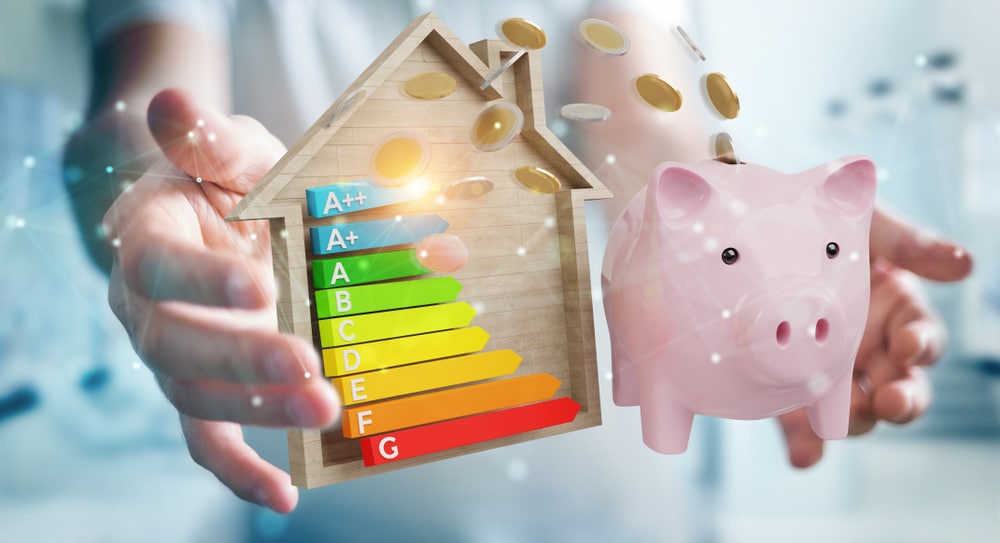 28 Mar
 Gas and electricity bills are amongst some of the highest costs that businesses face. If you are running a business, you may be wondering how to save on business electricity – for both environmental and financial reasons.
Here are D-ENERGi’s top tips on how you can save money on business electricity:
#Switch tariff at the end of your contract
When your existing business electricity contract comes to an end, you will automatically be rolled over to a more expensive “out of contract” rate – which is why complacency can cost your dearly.
Therefore, the best tactic is to compare business electricity per kWh tariffs between one and six months before your current contract is due to end.
This is where D-ENERGi can help. Our expert team can easily compare electricity tariffs from a range of suppliers, to find the best tariff for you.
#Check the age and efficiency of your business equipment
Take a closer look at the business equipment you have, from kitchen appliances and IT equipment to items such as vending machines. Find out how old it is, and what its energy efficiency rating is.
You don’t have to replace all of your business equipment as long as you take steps to improve its efficiency, such as: Cleaning it regularly – especially fridges
Putting a maintenance timetable in place
#Make sure equipment is shut down when it is not in use
Ensure you get all of your people involved in making sure all of your office equipment is turned off overnight, and over the weekend if it is not in use. Many people forget and leave items such as computers, printers, and photocopiers on standby instead of shutting them down completely.
Each piece of equipment left on standby may only be costing you pennies, but when you look at how many pieces of equipment you have like this in your business it can soon add up.
#Get a half hourly meter
One thing you might want to look at as a commercial entity is whether you qualify for a half hourly meter or not. A half-hourly meter can help you to get smarter with your business electricity as it will show you exactly when you use the most energy. Your bills will also be based on the exact amount of electricity you use, which will be an added encouragement for you to get energy smarter.
D-ENERGi is one of the longest established and well-respected UK independent energy solutions providers. So, if you are looking to compare business energy per kWh, you should get in touch with the expert team.
Read Article
Get the Best Business Energy Quotes
Price Match Available: Our price matching team will provide you the most competitive business energy rates. We won’t just match your current energy quote – we’ll strive to beat it!
Join thousands of UK businesses that have already started saving on their business energy costs!
Sign Up For The Latest News and Insights on Market Trends
"*" indicates required fields