



 28 Feb
 Keeping your hotel and or restaurant well-lit, warm, and operating smoothly with the right tools is essential to impressing your guests. However, with the current energy costs soaring, it can be difficult to cover the bills.
As a business energy provider, we have been helping our customers manage their rising bills, offering our best tips and advice to help keep costs down. For the hospitality industry, lots of energy is required to offer the very best service, so keeping costs low can seem like a far greater challenge. However, with the right advice, you can aim to lower your energy consumption, thus managing your business electricity and gas bills. Below are some of the ways we would recommend managing your energy consumption and costs.
Schedule a business energy audit
One of the first and most effective actions you can take as a business is to schedule an energy audit. As we have touched on in previous blogs, an energy audit will provide you with an assessment of your business’ energy consumption and energy efficiency. This information, provided by an external auditor or by a DIY checklist, will provide you with some initial recommendations that will help you to improve the energy efficiency of your business. This information will be unique to your business type and also the premises, meaning the steps you choose to take will be effective.
Monitor your heating and cooling systems
Any modern hospitality business, whether you run a restaurant, bar or hotel, will have heating and cooling systems in place. Perfect for maintaining a comfortable climate for your guests and staff, however these systems can impact your energy costs quite considerably! To ensure you are not overusing these systems and wasting money on heating and cooling your business, be sure to monitor these closely. Most systems will allow you to set a regular temperature. We would recommend staying between 18-20 degrees celsius when heating your premises.
Maintain your commercial fridges
Commercial fridge freezers consume far more energy than the standard domestic fridge freezer, making these a costly expense. However, commercial fridges are essential in the daily running of a commercial kitchen or bar. In order to maintain your fridges whilst reducing your energy consumption and keeping your bills low, we would suggest having these services regularly, whilst also ensuring they are not left open for long periods of time. Servicing a fridge can make a huge difference in the quality of its output, meaning the fridge won’t have to consume excess amounts of energy to maintain a regular, cool temperature.
Shutdown unused electrical equipment
Throughout a large hospitality business, such as a hotel, you may find lots of electrical equipment and tools that are consuming electricity but do not need to be. This is where the energy audit comes into play again. An energy audit could help identify these electrical items, giving you an idea of just what and how many electrical appliances may not need to be switched on permanently. Simply shutting down these items could make a real difference to your bills.
Motivate your staff to save energy while on shift
A positive attitude amongst your staff regarding energy saving and sustainability will support your business in its efforts to cut down consumption. Promoting this amongst your teams can be as simple as creating a checklist of electrical appliances to monitor, communicating your goals with your staff, asking your staff for ideas, and ensuring every team member is involved.
For more information about your business energy bills or to discuss options for cutting energy consumption, do not hesitate to get in touch with the D-ENERGi team.
Read Article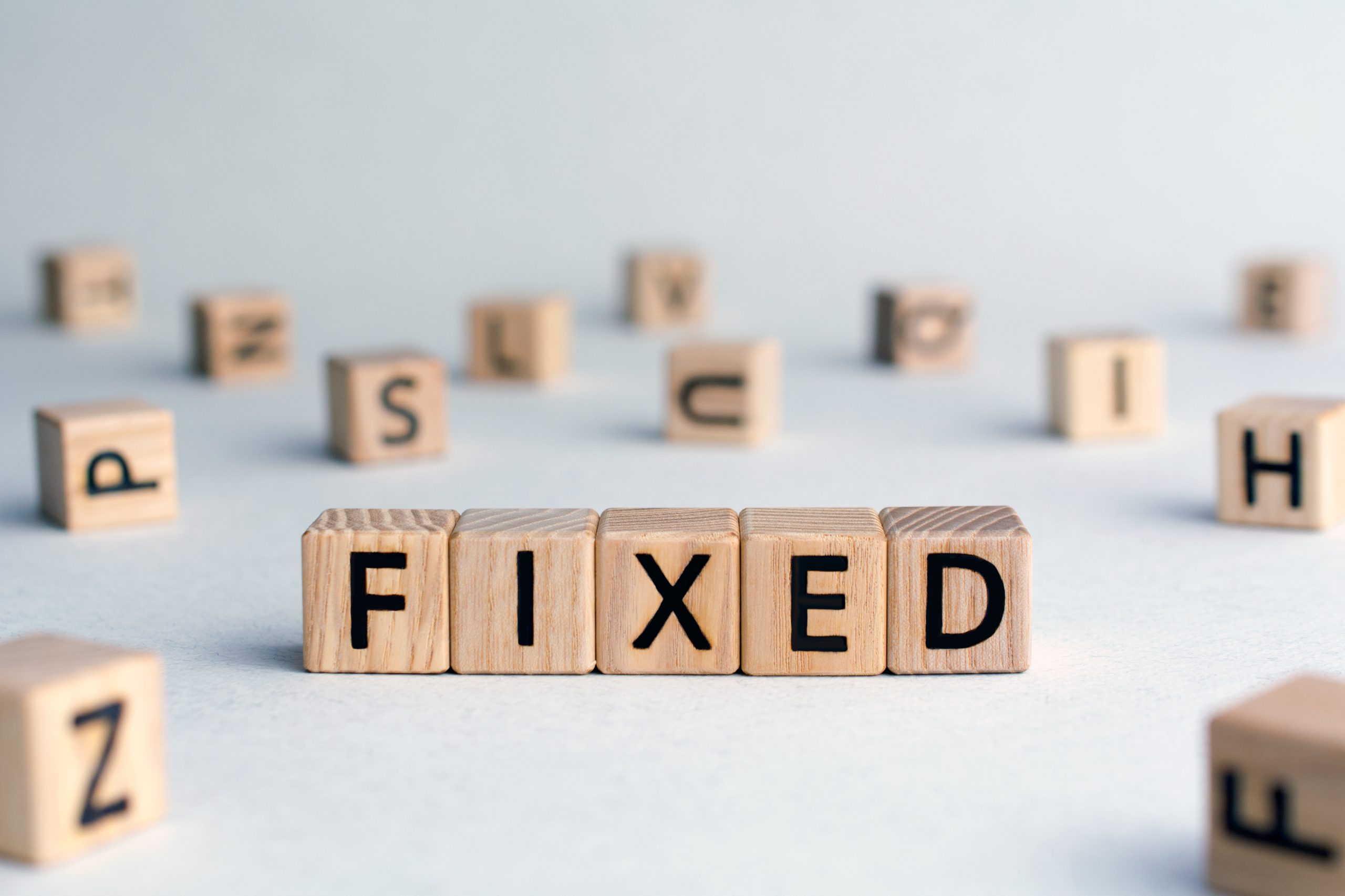 24 Feb
 Understanding the energy market and the details of the deals and prices available to you is important in ensuring you are not paying more than you should be for your business energy. In a financial climate like the one we are currently living through, businesses will be even more cautious to sign up to deals they are unaware of and as they should.
If you are looking to set up a new business energy contract, you may be thinking “what’s best?”. In this blog we are hoping to clear the confusion slightly, delving into the topic of fixed rate tariffs for business energy. Reviewing whether these are best for businesses.
What are fixed rate business energy tariffs?
Ensuring we are not assuming you already know the definition, we will start by simply explaining what a fixed tariff is.
Fixed rate tariffs are a good option for businesses hoping to lock in a price for their business energy for the next year or two. Usually lasting between 12-24 months, a fixed rate tariff offers a way to pay energy bills that are not influenced by fluctuations within the wholesale energy market. However, as with any tariff you sign onto, the more you use, the more you will pay. The price you are agreeing to pay in the beginning, that stays locked, is the price you pay per unit.
How a fixed rate tariff benefits a business
Unlike those receiving a salary from their employer, your business relies on the success of its sales each month to bring in revenue. Having the revenue to cover costs such as energy bills is absolutely vital to the survival of your business. Therefore, many tend to consider a fixed rate tariff as the most suitable type of energy contract for business energy customers, since the price per unit is locked in and is much more manageable than variable-rate deals.
Some of the benefits of a fixed rate contract for businesses include:
– They are typically cheaper than a variable rate
– Enable the customer to be protected from the fluctuations of a volatile energy market
– Allows businesses to control their monthly spend by simply managing their energy usage
It is important to note that when you are looking for a fixed-rate tariff, how ‘cheap’ this will be will ultimately depend on the market at the time. Suppliers will determine their fixed prices based on the conditions of the market, so it is also important to bear this in mind when shopping around.
D-ENERGi fixed price business electricity
AT D-ENERGi we are continuously working to provide our business energy customers with the very best prices for business electricity. Our tailored solutions are designed to suit your business needs. With our offer of fixed price electricity guarantees you know exactly how much you will be paying each month, with no surprises. To get your free business electricity quote today and to find out more about our fixed tariffs, simply get in touch with our friendly customer service team.
Read Article 14 Feb
 It’s easy to get overwhelmed while wading through the energy industry. Whether you’re looking for a new supplier or simply trying to understand your business’ energy bill, there’s lots of new terminology to grasp. From understanding definitions, processes, and terminology – it can quickly feel like you’re trying to understand a foreign language. If you’ve ever found yourself wondering what is meant when we talk about ‘capacity’ or ‘demand’, then this post is for you! Here’s a helpful glossary of terms commonly used within the energy industry so that you have all the knowledge needed to make better-informed decisions on your business energy requirements.
Below we have provided an A-Z style of glossary to help explain some complicated and good-to-know terms.
Agreed Capacity
This is the agreed amount of electricity load that can be supplied to a property. If you are renting or newly purchasing a property for your business operations this will be stated in your property’s Connection Agreement with the local DNO*.
Automatic Meter Read (AMR)
An automatic meter read is taken by a system that takes meter readings remotely. This data will be passed onto your business energy supplier for billing purposes.
Biomass
Biomass energy or bioenergy, as it can often be referred to, is an energy sourced from organic materials, this includes matter from recently living organisms such as plants. This is considered a ‘carbon neutral’ method of generating energy.
Carbon Credits
Carbon credits are a rising form of credit that can be purchased on the voluntary carbon market. These are used to permit owners an allowance of carbon dioxide emissions. Also known as carbon offsets. Many businesses are now opting voluntarily to buy carbon credits in order to develop a ‘green business strategy’ that coincides with government plans to achieve net zero carbon.
Carbon Neutral
Carbon neutrality means reaching a state in which there are net-zero carbon dioxide emissions. This can be achieved by either balancing the total amount of carbon dioxide removed with the total emitted or by completely eliminating the emission of CO2 from within society. Both are something governments across the world are hoping to achieve, as agreed.
*District Network Operator (DNO)
A district network operator or DNO is responsible for the installation and maintenance of electrical cabling, as well as the distribution of electricity to the supply point of the grid.
If you are attempting to contact your DNO, one way you can do this is by looking them up using your location information, such as postcode. Each district will have a different DNO.
Fixed Term Contracts
A fixed term contract is a supply contract decided with your energy provider for a fixed price over a fixed period of time.
Greenhouse Gas (GHG)
A GHG is simply a type of gas found in the atmosphere that traps heat. The main GHGs found in Earth’s atmosphere are water vapour, carbon dioxide, methane, nitrous oxide, and ozone.
Read Article 31 Jan
 Introduced at the beginning of January by the UK government, the Energy Bill Discount Scheme or the EBDS, for short, will spring into action from 1 April 2023. This will not only see the beginning of a new support scheme for businesses but will see the end of the temporary Energy Bill Relief Scheme (EBRS).
What is happening to the EBRS?
The EBRS, which we have touched on in a number of previous blogs, will be coming to an end on the 31st March 2023.
The government was clear from the beginning that this scheme would only be a temporary solution for businesses and all non-domestic energy customers to deal with the effects of rising wholesale gas and electricity prices. As wholesale gas prices have now fallen back down to levels seen before the invasion of Ukraine, the government will be ending the EBRS and instead introducing a new scheme, the EBDS.
Key facts about The Energy Bill Discount Scheme
Below are the simple key facts about the Energy Bill Discount Scheme, that all business energy customers should be aware of: This new scheme will come into effect from April 1st 2023
It has been designed to support businesses over the following 12 months.
The new scheme will limit the taxpayer’s exposure to volatile energy markets, with a cap that will be set at £5.5 billion.
The EBDS will then come to an end on 31st March 2024. What does this mean for business energy customers?
This new scheme will provide an energy bill discount to all eligible businesses. This will be a per-unit discount, subject to a maximum discount. These maximum discounts have been set at: Electricity – £19.61 per megawatt hour (MWh) with a price threshold of £302 per MWh.
Gas – £6.97 per MWh with a price threshold of £107 per MWh However the government has recognised that there are particular sectors where the higher energy prices leaves them more vulnerable than others. The list of Energy and Trade Intensive Industries (ETII) details which businesses are included in this. Those within these sectors will receive a higher level of support from the government. The maximum discounts for these will be: Electricity – £89 per MWh with a price threshold of £185 per MWh
Gas – £40 per MWh with a price threshold of £99 per MWh Just like previous schemes, customers do not have to actively apply reductions to bills. Instead, suppliers will do this on your behalf. However, if you are a company working within an industry listed on the ETII list, you will have to apply for the higher support available. The discount you are eligible for will be deducted in pence per kilowatt hour.
It is important to note that depending on the tariff and contract you are on and your individual organisation, the level of support will vary.
Are you eligible for the Energy Bill Discount Scheme?
On the official government website, the eligibility criteria has been outlined as anyone who is on a non-domestic energy contract including the following: businesses
voluntary sector organisations, such as charities
public sector organisations such as schools, hospitals, and care homes who are: on existing fixed price contracts that were agreed on or after 1 December 2021
signing new fixed price contracts
on deemed / out of contract or standard variable tariffs
on flexible purchase or similar contracts
on variable ‘Day Ahead Index’ (DAI) tariffs (Northern Ireland scheme only) For More information about the EBDS Scheme or to confirm that you are eligible, please do not hesitate to contact the D-ENERGi customer support team. We will be happy to help explain the scheme in more detail and explain how this will benefit your organisation from April onwards.
Read Article 24 Jan
 As the world continues to deal with the rising cost of gas, energy prices are not taking any dramatic falls just yet. While we navigate this new ‘normal’, businesses across the country will be particularly concerned about paying this winter’s energy bill. Some of the highest consuming industries in the UK include the retail and services sector, as well as the manufacturing industry. Consuming over 10,000 Ktoe each year.
In this latest blog article, we will be offering some top tips, unique to a range of industries, on how to deal with rising energy prices.
Retail & Hospitality Sector
As one of the largest consumers of energy in the UK, the retail and hospitality industry will have continued to use a large amount of energy this winter, despite rising costs. In order to keep customers satisfied, retail stores must continue to keep lit, heated and running as always. While restaurants require large amounts of energy to produce dishes, make drinks, and entertain guests. Despite this, there are a number of tips that retail and hospitality businesses can take on board in order to cut energy consumption and costs.
Firstly, these businesses should be paying close attention to the energy markets. Having the knowledge and understanding of energy prices and knowing how to predict fluctuations in the market will support financial planning within the business. Although you can never predict unexpected global events, like the Ukraine invasion, companies can use what they currently do know to ensure they have the budget set aside to pay higher bills than usual.
Secondly, restaurants in particular, should consider cutting down on the use of heating systems. With plenty of equipment in use and a crowded venue, restaurants don’t necessarily need to have the thermostat set to high. Instead it is useful to keep this set to a regular temperature that is comfortable for both guests and staff.
Both retailers and hospitality businesses will also benefit from switching off appliances and equipment that is not needed. For example a back office computer that is only used at closing time or televisions in hotel reception areas that do not need to be turned on 24/7.
Manufacturing & Warehousing
The manufacturing industry is another example of a big energy consumer in the UK. Responsible for the production and distribution of a wide range of products made and handled within the country, the industry uses a large number of machinery and equipment which requires lots of energy. As such, businesses within this sector are feeling the pinch.
Where many appliances are used, a manufacturer may wish to consider reviewing the equipment and tools they currently use and optimise these. Either by buying new or upgrading to more efficient, energy-saving equipment. This could be as simple as adapting the settings of your machinery to run more efficiently or having these serviced by an engineer.
Since warehouses and distribution centres are such large places, keeping these warm on colder days can be a challenge. Instead of turning up the heating system, it may be worth reviewing the insulation of your building. You will find large warehouses often have draughty spots or poorly insulated roofs and windows. By investing in new insulation now, you can help correct and enhance the working temperature of your warehouse for years to come.
One final tip for businesses within the manufacturing sector, is to pay attention to the industrial doors you have fitted throughout your buildings. In rooms that must be temperature-controlled, such as refrigerated storage rooms, the industrial doors should be of a high-quality. This is to ensure these rooms stay cold and the cooling systems do not need to work overtime to ensure the preservation of goods stored within. To enhance the operation of your industrial doors, be sure to have these regularly serviced and maintained by professional, qualified engineers.
Office-based Businesses
With offices all over the country, we thought it best to also touch on how an office-based business can focus their attention on cutting energy this year.
If you work in an office, you will most certainly know the struggle of maintaining a consistent temperature that keeps everyone happy. And although some would love the office to feel like a sauna, other members of staff prefer the room on the fresher side. All this switching between temperatures does not have a great impact on energy usage. In fact, regularly playing with the thermostat can waste energy, money, and lead to breakdowns.
In order to keep everyone happy, keeping your office at a regulated, comfortable temperature is imperative. It has been suggested that temperatures between 21 – 22°C is best for office work. In fact, managers will be interested to know that temperatures above 23°C may actually have a negative effect on productivity.
We would also suggest turning off any office equipment that is not in use, off at the end of each working day. It is not necessary to have laptops and screens running all through the night and simply costs the business money. For more advice and information about your business energy usage and prices, do not hesitate to get in touch with our team. We can talk about the current support on offer for businesses and provide information on business smart meters for even closer monitoring of your business energy usage.
Read Article 17 Jan
 The energy price cap is set by Ofgem. Ofgem, as you may already know, are an independent national regulatory body who oversee the gas and electricity markets.
The cap itself is a limit set by Ofgem that determines the maximum amount of energy suppliers are able to charge you for each unit of energy you use. This applies if you live in England, Scotland, and Wales. It came into place back in 2019 and has been used ever since to ensure that customers who are on default energy tariffs are treated fairly and are not disadvantaged by the energy market.
Over the last few months the energy price cap has been a big topic of discussion. With the rising wholesale prices of gas prices, the energy price cap became a focal point. However, one thing to note is that there is no energy price cap for business energy, which has left businesses in far more uncertainty.
Why does the energy price cap not apply to businesses?
The energy price cap was an initiative to simply support domestic energy customers, this does not reach into the business energy sector. However, this does not mean that there is zero support for businesses with the rising energy costs.
Currently, there are other government schemes in place or in the pipeline to support businesses during this time.
The EBRS Scheme
The EBRS Scheme will be running until March 31st 2023. This is a government scheme that works to limit the wholesale price that suppliers pay to generators for energy. This scheme has enabled energy suppliers to support their business energy customers, during a time when wholesale gas prices are incredibly high and increasing.
At D-ENERGi, we have touched on this in other blogs in further detail.
The new EBDS Scheme
Once the EBRS Scheme comes to an end in March 2023, the government have recently announced the EBDS initiative. This is the Energy Bills Discount Scheme which will run for a year from April 2023 through to April 2024. All non-domestic consumers in both Great Britain and Northern Ireland are eligible. Since wholesale gas prices have lowered back to levels they were before the invasion of Ukraine by Russia, these schemes have only ever been intended to be temporary. This new EBDS Scheme will work to continue to support businesses over the next 12 months, as they continue to navigate the volatile energy markets.
For more information regarding the current support on offer for business energy customers, do not hesitate to get in touch with our team here at D-ENERGi.
Read Article
Get the Best Business Energy Quotes
Price Match Available: Our price matching team will provide you the most competitive business energy rates. We won’t just match your current energy quote – we’ll strive to beat it!
Join thousands of UK businesses that have already started saving on their business energy costs!
Sign Up For The Latest News and Insights on Market Trends
"*" indicates required fields