




 26 Oct
 A great time to see if you can save on business electricity is if you are moving to new business premises – this can help prevent you from paying over the odds.
What will happen if I don’t compare business energy prices?
If you move to new business premises without taking the time to compare business energy per kWh prices, then you may end up paying the previous tenant’s business energy supplier at an ‘out of contract rate’ which tends to be very high.
How can I get a better business energy deal?
Make sure that you take the time to perform a business energy comparison before you move premises, and make the switch to a cheaper supplier as soon as possible. If you use both business electricity and business gas then make sure you get a quote for both. You are not tied into using the same supplier as the previous tenant, so make sure you get in touch with D-ENERGi and we can search the entire market for you to make sure you get the best deal.
How do I set up a business energy contract?
Checking prices for business energy contracts yourself can be very time consuming, which is why the team at D-ENERGI are here to take the hassle out of it for you. We search the entire market on your behalf, to find you the best deal which will save you the most money in the long run. You will also deal with a dedicated account manager who will always be on hand to deal with your enquiries.
With over 18 years of experience, we know that the best business energy deal is not just about saving money – although saving money can help your businesses bottom line immensely. We want to know as much as we can about your business so that we can find a deal that is exactly tailored to your needs, according to Lofty Property Management. This could be a green supplier as you are interested in sustainability, or you want a lower standing charge, or even that you want to have the same supplier for multiple premises.
The D-ENERGi team can get you quotes for a variety of business options, and we will explain these options to you so that you can make a more informed decision. We will keep things simple as well so that you know exactly what is being offered.
If you are moving to new premises and want to compare business electricity per kWh or business gas prices, then please call us today. You can reach a friendly and experienced team on 0800 781 7626.
Read Article 12 Oct
 If you are looking for the cheapest business gas prices then having an understanding of business gas prices, plans and contracts is important, so that you know you are getting the best deal.
At D-ENERGi we know that no two businesses are the same, we’ve been in the business for over 18 years after all.
The size of your business is really important when you want to compare business gas prices, as it can be the difference between paying 4.3p a unit to 5p a unit, and 19p and 25p a day standing charges.
Business Size
Business gas rates are usually based on four sizes of business:
• Micro – less than 10 employees and turnover less than £2 million
• Small Business – Less than 50 employees and turnover less than £10 million
• Medium Business – Less than 250 employees and turnover less than £36
• Large Business – 250 employees or more
Different types of tariffs
The gas market can be quite volatile, which means business gas prices can change quite a lot in a short space of time, and this can have an influence on the type of pricing plan or contract you opt for:
• A fixed rate tariff means your price will be locked in place for three years – the benefit of which is that you won’t pay any more if the price of gas increases, however, you also won’t be able to pay less if the price of gas drops
• If you used a lot of gas in your business you may want to think about a flexible tariff, as this lets you pay upfront. Again, you will lose out on this if the price of gas drops after you have paid, and price rises can mean it is hard to budget.
• The other option is a pass-through contract, which is a mix of fixed-rate and flexible rate tariffs. You get a lower fixed rate unit price, but flexible standing charges which will fluctuate in line with government policy.
• If you want to improve your business’s sustainability efforts then you should look at eco tariffs.
Here at D-ENERGi we make it really easy for you to find the cheapest business gas prices, so, call our team at 0800 781 7626 and we can help you to reduce your business energy costs.
Read Article 28 Sep
 In our 19 years of business, we have found three main reasons why people tend to want to compare business gas suppliers UK, and they are: Business is all about the bottom line and switching your business gas supplier can be a great way to save some cash – in exactly the same way that switching your home gas supplier is
Customer service. Many people find that the customer support is lacking when they are facing issues with their business energy – and they want to make sure they have the right help when they need it
Many companies have now changed their focus towards being more sustainable, and they want their business energy supplier to reflect that change as well.
If you have looked at business gas prices and wondered if you could pay less for them, then you’ll be pleased to learn that the process of switching business gas supplier is actually fairly straight-forward. All you need to do is fill in our online form, and we will call you back with a list of the most competitive quotes available. Then all you have to do is choose the quote that you prefer.
Your chosen business energy supplier should be able to handle the switchover for you. You should see no disruption to your gas supply, and there should be no groundwork needed as every supplier uses the same pipes to deliver your gas. There are a couple of things you will need to do though, and these are: Make sure all outstanding bills for your existing supplier are paid in full
Take a final meter reading
Don’t forget solar installers as well, that you can’t switch business energy supplier until your existing contract has ended. Meaning, you can’t sign up to a new business gas supplier until the “switching window” is open – which is usually between one and six months before the end of your existing contract.
When you switch with D-ENERGi, whether it be for cheaper business electricity prices or because you want a greener energy supplier, we will take all the weight off your shoulders and pull all available quotes together for you so you can concentrate on running your business.
Read Article 14 Sep
 There is no easy way to compare business electricity prices per kWh as there is no standard price for it at the moment, so it can be difficult for businesses to know how much they should be paying.
Having said that, there are some figures available out there that try and show what the average number of kWh business may use on average on annually, by business size, which is a good place to start: A Micro Business (employs less than ten people) will probably use around 8000 kWh a year
A Small Business (employs between ten and fifty people) will probably be around 20,000 kWh per year
A Medium Business (employs between fifty and two hundred and fifty people) will probably use around 40,000 kWh per year
A Large Business (employs over two hundred and fifty people) will probably use around 60,000 kWh per year
Research has shown that Small and Medium businesses tend to pay between 2.9p and 3.4p per kWh but have a higher standing charge of approximately 70p a day. Lower prices for kWh tend to be reserved for those companies that are using 100,000 kWh or more.
As you can imagine, the business electricity prices per kWh can vary dramatically depending on which energy company your contract is with, as well as how many kWh you are using. This is why it is best to compare your annual bill when looking at switching suppliers, rather than just focusing on the absolute rates. Make sure you have your past years’ consumption data to hand when you are comparing prices so that you get a truer picture of what the overall price might be.
It is important to keep in mind as well, that the price per kWh is not the only cost you will see on your bill, you will also see a standing charge – which is paid at a daily rate regardless of how much energy you actually use. You will also see taxation charges as well, such as VAT and CCL (Climate Change Levy).
Keep in mind as well that business gas prices per kWh tend to be lower than business electricity prices as well. If you are thinking of switching business electricity or gas supplier, then contact the team at D-ENERGi as we can help make the process much simpler.
Require assistance?
We take pride in our commitment to providing the most competitive rates for business electricity and gas. If you are seeking guidance on how to effectively reduce your business electricity and gas costs, or require assistance with a business energy switch, please call our dedicated Customer Services team at 0800 781 7626. We assure you that calls will be answered promptly within five rings or less!
Or you can enter your queries by clicking the ‘Chat Now’ button located at the lower right corner during business hours.
Click here for a Free Quote of business electricity and gas, our dedicated Account Manager will be assigned to provide bespoke business energy prices with excellent customer service.
Read Article 24 Aug
 When you are looking at your business energy bills it is important to remember that although there are a wide variety of costs that go into making them up, the two critical ones are: Standing charge. The fixed amount you are charged on a daily basis, regardless of how much energy you actually use
Unit rate. The price you pay per unit of energy used, usually shown as kWh – these are the costs that will vary each month But what do you need to know when you are looking at business energy prices per kwh?
What does kWh mean?
kWh is the abbreviation of kilowatt-hour – a measure of energy that is equal to 1000 watts being used for an hour. Every appliance that is used in a business has its performance measured in watts, and you should be able to find the wattage of an item on its packaging or label.
What is the average cost of electricity per kWh?
When we are looking at business electricity rates per kWh the rates paid tend to vary by region, but the average cost within the UK is around 14.40p per kWh. This compares to around 20.58p per day on average for the standing charge within the UK – although again there are differences in regions.
How do energy providers use kWh information?
When your chosen energy supplier is calculating your energy bill, they will look at how many kWh of electricity and gas you used over a set period of time and then multiply this by the price per unit set in your agreed tariff.
They will also multiply the number of days covered by the billing period by the daily standing charge and then add this cost to your kWh cost to come up with the total amount owed.
What other costs are included in your business energy bill?
On top of the costs of the standing charge and kWh price, you will probably also pay taxation costs such as VAT (at a rate of 20%) and the Climate Change Levy (CCL) as well. This is why when you are comparing business energy suppliers it is best to compare the cost of your annual bill rather than just the rates.
You may find a supplier with a cheaper kWh price, for example, but they may then have a higher standing charge which you have to pay. If you use your consumption data for the past year as a guide, you will have a much better idea of overall costs.
If you are looking to compare energy prices then the best way to do it is to contact the D-ENERGi team. You don’t need to waste any time going from supplier to supplier to find the best quote, we will take care of all of that for you.
Read Article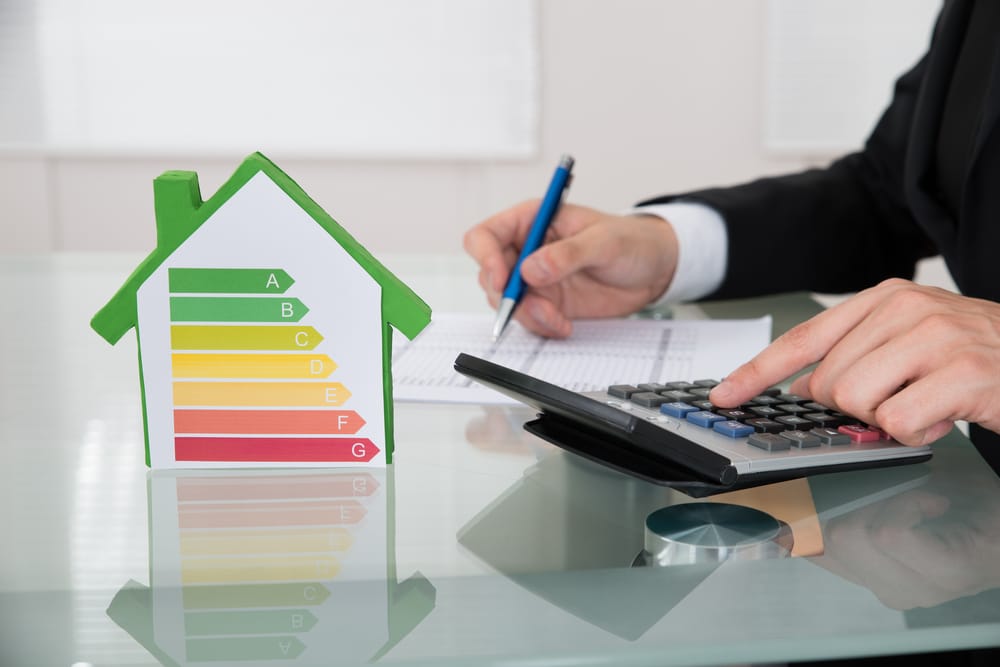 17 Aug
 Research has shown that more and more businesses are choosing to switch energy suppliers than ever before, so why is now a good time to do a business energy comparison?
#1 Reap the benefits of new technology
It should go without saying that the best way for businesses to reduce their energy bill is by reducing their energy consumption. This has never been easier than it is now, with the development of new technology such as specialised software and hardware, and smart meters. For example, new energy monitoring software can help you to stay better informed about how your business is managing its energy consumption and help you to identify problem areas that you may want to avoid in the future.
#2 Get better customer service
Completing a business electricity comparison and switching supplier shouldn’t be all about unit rates, you should take customer service into account as well. If you have been suffering from issues such as incorrect billing, inaccurate direct debits, and poor service in general, then you may want to switch suppliers even if it means paying a higher unit rate. Make sure you take customer satisfaction scores and reviews into account when you are switching suppliers.
#3 Sustainability and being green
If you want to do your bit for the environment and improve your sustainability score then you can opt for a green electricity and gas business contract. You can dramatically reduce your business’s carbon footprint, improve your public image, and do your bit for the environment by switching suppliers to a green energy supplier. Green energy deals tend to be more expensive than traditional energy contracts but this can be balanced out by the tax relief you may qualify for by the reduction in your carbon footprint.
#4 A reduction in spending
Obviously, the main reason why most businesses look at doing an energy cost comparison is that they want to reduce their energy costs. Comparing the wide variety of quotes available on the market means that you could save hundreds of pounds on your business energy bill. Even if you would prefer to stay with your current supplier you may be able to re-negotiate your contract to take advantage of their latest offers – although the savings may be smaller than switching suppliers altogether.
If you are thinking of doing a business electricity or business gas comparison then please contact the D-ENERGi team today – we have been providing our services to commercial enterprises for over 19 years.
Read Article
Get the Best Business Energy Quotes
Price Match Available: Our price matching team will provide you the most competitive business energy rates. We won’t just match your current energy quote – we’ll strive to beat it!
Join thousands of UK businesses that have already started saving on their business energy costs!
Sign Up For The Latest News and Insights on Market Trends
"*" indicates required fields