




 5 Apr
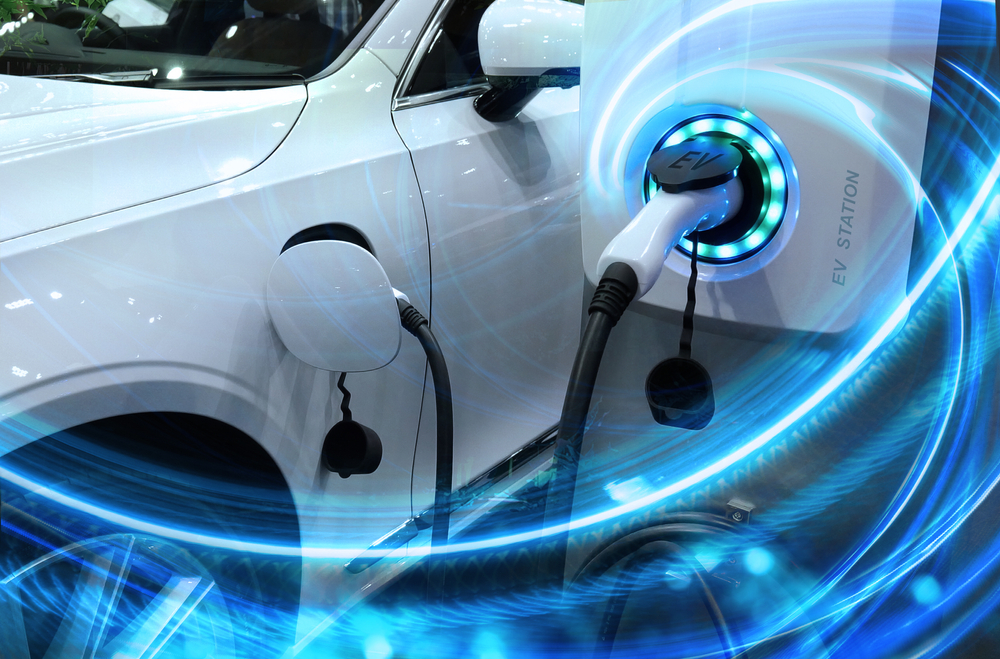
5 Apr With the charging infrastructure in the UK growing rapidly, this article will tell you everything you need to know about your electric vehicle charging station.
Electric vehicles and plug-in hybrids are becoming more and more popular and are increasingly better developed than they have previously been and so the number of electric vehicle charging points is growing on a daily basis.
There is still a little confusion over the terminology involved with electric charging, as it is still such a new technology, so this guide will hopefully clear up a little of the jargon involved.
What is an electric vehicle charging station?
There is no standard definition for an electric vehicle charging station at the moment, but the most widely held belief is that if there is more than one electric vehicle charging point in the same place then it becomes a ‘station’. This may not be on a petrol station forecourt though – charging stations tend to be tucked away in the corner of a car park somewhere – either a motorway service station or a multi-storey somewhere.
You may be able to find individual charging points on the street still, and some local councils are looking into some experimental ideas such as lampposts with charging points attached, but the move towards more electric vehicle charging stations is being mainly driven by a change in consumer behaviour.
How many public electric vehicle charging stations are there?
According to Zap-Map, a company that monitors the charging infrastructure within the UK, there are currently around 14764 locations providing 23128 individual chargers. It is interesting to note that these numbers are continually increasing, with 773 charging points being added to the map within the last 30 days alone. This means there are now more electric vehicle charging points in the UK than there are petrol and diesel stations!
How long does it take to charge an electric vehicle?
If you think about the wide variety of electric vehicles available and the number of companies who offer electric vehicle charging points, then it should come as no surprise that the actual length of time it takes to charge an electric vehicle can vary wildly as well.
The length of time taken usually relies on how many kWh the charging station offers and how many the electric vehicle can accept, and there are three different charging rates: Slow charging rate = 3 kWh (around 8 hours to fully charge from empty)
Fast charging rate = 7 to 22 kWh (around 4 hours to fully charge from empty)
Rapid charging rate = 43 to 50 kWh (around 30 minutes to charge 80%)
Hopefully, this has cleared up some of your questions about electric vehicle charging. We are focusing on this subject for our next few blog posts, so keep reading to find out more.
Read Article 22 Mar
 Electricity bills are some of the largest expenses that many business have to deal with. If you are running a business yourself, then it is highly likely you are wanting to find out more about how monitoring costs and reviewing your firms energy efficiency can help you save on business electricity.
Here are some tips for you on how you can do just that! Switch tariffs at the end of your contract. When your business electricity contract comes to an end, you will usually be automatically rolled over to a more expensive tariff, which is known as an ‘out-of-contract’ rate. If this has happened to you, then you need to sort it quickly, as it can lead to large bills. The best thing to do in this instance, then, is to compare business electricity per kwh from a wide range of suppliers, to find the tariff that is the best for you.
Complete an energy audit. As well as looking at whether there is a cheaper tariff out there that would be better for you, you can also complete an energy audit of your business which will not only give you an overview of how your company uses energy, but also what areas of waste there are. The Carbon Trust has lots of guides and tools available to help you with this, or if your turnover is more than £50 million or you have more than 250 staff then you can have an energy audit completed as part of the Government’s Energy Savings Opportunity Scheme (ESOS)
Turn equipment off when it is not being used. We all have a large amount of equipment in our businesses, such as desktops, printers, tv’s and so on. Do you know if they are turned off overnight or at weekends when they are not in use? Every piece of equipment that is left on may only be costing you pennies individually, but when added it up it can mean a larger bill than expected at the end of the month
Use the right kind of meter. When it comes to switching your energy supplier, you may also be offered a smart meter, if you don’t already have one installed. If you are a larger business, you may be offered a half-hourly meter instead. Both of these options are a good idea as they help your supplier to base your bills on the exact amount of electricity you are using, which will also encourage you to be more energy efficient
If you want to compare business energy per kwh to find out whether you can get a better deal or not, then get in touch with the team at D-ENERGi and let us take care of that headache for you.
Read Article 8 Mar
8 Mar It doesn’t matter if you are running a small sewing and alteration business or have a national chain of stores – you will want to make sure you are paying the cheapest business gas prices to make sure your energy bills aren’t higher than they should be. However, you may find that if you haven’t switched your business gas supplier recently, you may be paying more than you need to.
Before you jump in and switch suppliers though, it is a good idea to find out a little more about how business contracts work – although they are very similar to domestic gas contracts, there are a few differences.
Why switch business gas suppliers?
Most domestic gas deals are based on off-the-shelf tariffs, whereas business gas deals tend to be tailored to the individual business instead.
Switching business gas suppliers is often a quick way to reduce your business energy costs without impacting the day-to-day running of your business. Your gas will still come through the same pipes it does now, so there will be no interruption to your gas supply – and no need for any digging or drilling works on site.
If you compare business gas prices and switch to a new deal, this usually means you get to choose which tariff you are on as well. Once you start looking into it, you may find that you have been stick on a more expensive tariff than needed because you have recently moved to new premises, for example, of not changing your gas supplier for years. Switching to a new supplier means you have the option to choose between a fixed-rate or flexible-rate tariff – depending on which works out at the best deal for you.
Most business owners tend to opt for a fixed tariff deal as they feel protected against any future energy price rises and it helps them to budget each month as they know what they are paying (provided their consumption level remains the same).
A flexible tariff is still worth considering, however, as you may see a drop in your monthly gas bills if the price of gas drops and your supplier opts to pass the savings on to you. If they don’t pass the savings on, however, there is not much you can do.
The other big difference between fixed and flexible tariffs is that with a fixed tariff you usually have to give six months’ notice to change supplier, whereas a flexible tariff is usually more flexible – which is ideal if you run a pop-up shop or have a short-term lease.
Why use D-ENERGi to switch business gas suppliers?
Our experienced, friendly, and helpful team of experts makes it really easy for you to switch business gas suppliers by comparing all the deals out there to find you the cheapest business gas prices available. Our switching service is free and impartial, so why not let us take the stress of changing business gas suppliers out of your hands?
Read Article 22 Feb
 If you are wondering what is going to happen to business electricity and business gas prices in the next ten years, and how ‘net zero’ transmission policies will affect your business, then read on.
The UK Government released its “Energy White Paper” in December last year (2020) which explained how they planned to move the UK to a net-zero future by decarbonising all sectors. In the report is the plan they aim to follow in order to cut carbon emissions by 230 million metric tonnes in the next ten years, while also supporting 220,000 jobs.
But what does all this mean for business? Well, if you are a business owner you will be faced with making some quite radical changes over the coming years, which can be broken down as follows: A shift towards zero-emission electric vehicles (EVs). The UK Government has banned the sale of new petrol and diesel cars from 2030 which means you need to start thinking about how you are going to switch your business fleet to electric vehicles now.
The construction of greener, and more efficient buildings. Gas boilers will need to be switched to more environmentally friendly options, such as low carbon or hydrogen-ready models. In the meantime, you can switch to greener business gas suppliers UK such as D-ENERGi
The movement towards a flexible and low-carbon energy system. The UK Government has committed to generating emission-free electricity by 2050, which focuses mainly on wind and solar power. In the meantime, the easiest way for you to start reducing your carbon emissions as a business is to switch to a green business energy tariff.
This pledge by the UK Government to reach net-zero by 2030 means that now is the best time for you to start thinking about how you can help them to deliver on their climate change commitments. There are lots of opportunities out there for businesses who are serious about contributing to this decarbonisation challenge – whatever sector they are in or whatever size their business is. Starting down the pathway of carbon reduction now will help you to balance both your environmental and economic aims, while also helping you gain control over your energy costs and increase your business resilience.
To take the first step towards greener energy and take advantage of lower business electricity prices get in touch with the D-ENERGi team today for a free quote.
Read Article 15 Feb
 As one of the UK’s cheapest business electricity suppliers, it pains us to say this, but the fact is that business electricity bills have increased in price by around 43% in the past ten years. But what has led to this rise? Is it really due to wholesale price rises, as the top six energy providers claim?
Let’s take a closer look at a breakdown of an average business electricity bill, and see how much the components of your bill may cost (in kWh).
What are the three key components of a business electricity bill?
A business electricity bill can be broken down into three main parts, which are: Commodity costs (also known as wholesale costs) – 33%
Non-commodity costs (also known as government costs) – 33%
Non-commodity systems and transmissions costs (from the National Grid) – 33% Now, let’s break these down even more
Commodity Costs / Wholesale Costs
In actual fact, the wholesale cost of electricity has remained fairly stable over the past ten years, although prices have fluctuated through different seasons. When this blog was written, the year-ahead price was £55.73MWh which is 5.6p p/kWh which is not far off the average price in 2010.
However, making sure your business is on a suitable tariff by switching to D-ENERGI and the cheapest business electricity prices we offer, can help you save money regardless of wholesale cost fluctuations – especially if you are on a fixed-rate contract.
Non-commodity Costs
You probably didn’t know this but a third of the cost of your business electricity bill goes to the UK Government to pay for environmental initiatives. There are five key components that go into these charges, and these are: Capacity Market – annual auctions for the capacity to be provided by power stations, demand-side response, and energy storage
Climate Change Levy – designed to reduce carbon emissions and improve energy efficiency – and only payable by businesses
Contracts for Differences (CFDs) – CFDs guarantee a fixed price for each MWH generated aka the ‘strike’ price. These are the current contract mechanism for low carbon generation
Feed-in Tariffs – introduced to promote the installation of small-scale renewable and low carbon electricity generation – capped at 5MW
Renewables Obligation Certificates (ROC) –support scheme for development of large-scale electricity generation Non-commodity Transmission and Distribution Costs
The final part of the charges on your bill comes from the use and maintenance of the electricity transmission and distribution system, and typically include: Balancing Services Use of System (BSUoS) – costs that relate to the day-to-day operation of the transmission system which balances the grid
Distribution Use of System (DUoS) – Cover the cost of distributing the electricity to the system
Transmission Network Use of System (TNUoS) – The cost associated with transmitting electricity from power stations to grid supply points via the high voltage (HV) transmission network.
If you are looking for the cheapest business electricity rates UK, then switching to D-ENERGi can help. Contact us today to find the most suitable tariff for your business.
Read Article 8 Feb
8 Feb Business and domestic electricity come from the same source, and are supplied through the same cables – but they are not the same. Your business electricity contract is set up differently from your domestic electricity contract – and so you will pay a different rate. This is why it is always worth it to compare business electricity prices per kWh.
If you run a large company, you may be charged a half-hourly rate for your electricity, or have to have more than one meter installed to ensure your readings are accurate, and so you need to keep a close eye on your business electricity prices per kWh.
There is one thing that domestic and business electricity do have in common though. That is the fact that if you haven’t switched a supplier in the last 12 months, your bills will be higher than they need to be!
If this is the case, then D-ENERGi can help you to get a better deal.
How to switch business electricity supplier
Switching to a better business electricity (or business gas) deal is so easy with D-ENERGi. All you have to do is fill in your Name, Company Name, Phone Number and Email Address and we will contact you. Alternatively, you can speak to us directly on 0800 781 7626.
We will find out a little bit more about your business and your current energy use, and then we will offer you the most competitive prices and rates in the UK.
Why should you switch your business energy supplier?
Every business is individual, no matter what niche it is in, and so every business energy need is individual as well. It doesn’t matter the size of your company, or what you do, if you have let your old deal lapse then you will probably be paying more than you need to – and this can negatively affect your overheads.
Switching to D-ENERGi, the independent energy solutions provider means we can help you really drive down your energy costs. We have spent years creating great partnerships with energy suppliers and working to negotiate exclusive deals to try and protect you against price hikes and make it easier for you to budget month to month.
How much money could you save by switching to D-ENERGi?
The amount of money you could save by switching to D-ENERGi will depend on the size of your company, the size of your business premises, the number of employees you have, and your overall business efficiency.
Why not call our business energy experts today on 0800 781 7626 to compare business electricity and business gas prices per kWh, and find out exactly how much your business could save?
Read Article
Get the Best Business Energy Quotes
Price Match Available: Our price matching team will provide you the most competitive business energy rates. We won’t just match your current energy quote – we’ll strive to beat it!
Join thousands of UK businesses that have already started saving on their business energy costs!
Sign Up For The Latest News and Insights on Market Trends
"*" indicates required fields