


 28 Feb
 In today’s highly competitive business landscape, it is crucial to find effective strategies for reducing business electricity costs. By minimizing energy consumption and enhancing energy efficiency, businesses can significantly boost their profits. This article highlights simple yet impactful methods to save on business electricity costs.
Unplug all device chargers when not in use
Phone and laptop chargers still consume a small amount of energy, even when they are not plugged into the devices concerned. In fact, some people call them “vampire appliances” due to the fact that they continue to suck energy even when not in use. So, make sure all of your employees unplug chargers when they are not in use.
Switch off all devices when not in use
In a similar vein to the above, if you don’t power down and switch off electrical devices when they are not in use, you could be adding hundreds if not thousands to your business electricity bill.
A standard desktop computer uses about 0.1 kWh energy when it is on standby, which is about 1.4p. Not a lot, you may think, but when you times it by 100 computers used 5 days a week for 52 weeks a year, it amounts to £728 extra on your electricity bill, which you don’t actually need to pay!
Ask employees not to use screensavers
Most people don’t realise this, but screensavers are far less energy efficient than actually applying proper powers settings.
Turn the heating down
This is usually the first thing business owners do when they are trying to save money on business energy because even just turning the heating down by 1 degree can have a hugely positive effect on your business energy bill.
Make sure you are on the right business electricity tariff
Lots of business owners don’t realise that they are actually paying more for their business energy than they need to as they are on the wrong tariff. Let D-ENERGI compare business energy per kWh for you to make sure you are not spending way more than you should. Get a quick quote online today.
Install smart lighting
We all know that switching off the lights when we leave a room can save money, but many of us just forget to do that. If you install motion-sensitive lighting in areas such as corridors and toilets, you remove the human element from this action altogether and save money in the long run.
Fix dripping taps immediately
All dripping taps and leaks should be instantly fixed, as the cost of repairing them will be far less than the hike in your water bill should you leave them unfixed.
Encourage your employees to be energy efficient champion
The best way to save business energy in your workplace is to get your employees involved to help you along. You could even nominate an energy efficiency champion to take charge and encourage other people to get involved as well.
Compare business electricity with D-ENERGI to find the most competitive prices and rates in the UK.
Read Article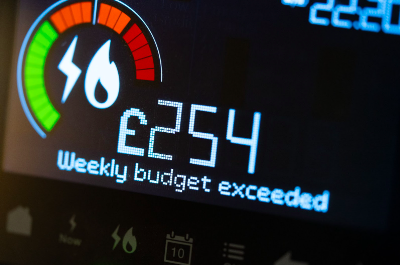 23 Feb
 In today’s energy-conscious world, businesses are seeking solutions to optimise their energy consumption, smart meters have been designed to track business’ energy usage patterns, provide accurate meter readings and a visual representation of real-time energy usage. They are the ideal solution for businesses to gain control over their energy consumption, and find solutions to reduce business energy bills.
Progress in rolling out smart meter
Starting in 2011, the smart meter rollout began. According to the government statistics, in smaller, non-domestic sites (such as micro and small businesses) 145,900 smart and advanced meters were installed by all energy suppliers. This is a 48% increase on 2020.
As smart meter installations continue across the country, gas and electricity suppliers now have binding annual targets to achieve to ensure all their non-smart customers have smart and advanced meters installed by 2025.
Are people reluctant to install smart meters?
Although these figures are suggesting an uptake in smart meter installations, the majority of these meters are still yet to be installed.
This may be because there are several misconceptions surrounding the use of smart meters. A commonly asked question regarding these devices is whether or not they use more electricity.
Although it is true that your small device uses your electricity supply for power, the very small amount that it does use, does not counteract the benefits this device provides. In fact, there is no additional cost for the installation of your smart meters. You won’t have an extra charge on your energy bill because you chose to have a smart meter.
How do smart meters work?
Smart meters work by measuring your business gas and electricity usage and sharing this data directly with your energy supplier. This means no more electricity or gas meter readings needs to be submitted. The smart meter does all this for you, sending accurate and regular readings to avoid estimated energy bills. A smart meter does not require internet access, instead they use the secure smart data network to share information about your energy usage. The system of which this works can be compared to how other wireless systems and devices use radio waves. Smart meters can be used in replacement of traditional meters, such as prepay meters.
Your smart meter comes in two parts: the smart meter and digital display. The smart meter will be fitted where your traditional meter is housed, while you can choose to place your digital display in an accessible place. This accompanying digital display will give you access to data about your business electricity or gas usage. This will help you to manage your business energy usage, with the intention of helping you save energy usage and save money on energy bills.
Smart meters for small businesses
As small businesses feel the pinch of the rising cost of living, business owners are regularly seeking new tips and advice for saving energy costs.
One way to do this is to pay closer attention to monthly bills and to find ways to reduce these costs, if possible. In a study by Smart Energy GB, 72% of small business owners have already made the switch to a smart meter or are considering doing so to manage their energy use.
It is simple to request a smart meter for your small business, if you haven’t done so already. Our regulator OFGEM has made it mandatory to categorise businesses we supply into 2 categories referred as either micro business or non-micro business. As a D-ENERGi customer you have a choice of between two types of smart meters. These are an AMR meter or a SMETS2 meter. Both of which will offer similar benefits, although we do recommend referring to our handy comparison table here, to familiarise yourself with these devices and to find the meter that is better suited to your requirements. Each type will help you better understand how your business uses energy.
AMR smart meters – you can gain a better understanding of your energy consumption. That can help you reduce the amount of energy you use. And that can help to lower your costs and reduce your carbon footprint. Your AMR smart meter sends your meter readings remotely. So you’ll benefit from accurate bills based on your actual readings, rather than an estimate.
SMETS2 smart meters – give you all the same benefits of AMR meters. These include remote meter readings, accurate billing without the need for estimates, plus access to your energy data. You can view your energy consumption in near real-time.
Whether you’d prefer AMR or SMETS2 smart meters for your business, do not hesitate to get in touch with our friendly Customer Services team at 0800 781 7626.
If you are yet to be D-ENERGi customer and your business energy contract is approaching its end, take the opportunity to compare business energy prices and secure a better deal.
Get your free quote today.
Read Article 19 Feb
 Value Added Tax (VAT) is a tax that is applied to most goods and services in the UK, including business energy bills. The standard rate of VAT is 20%, but there are a number of discounts and exemptions available to businesses, which can help to reduce the amount of VAT you pay. Not only is this a useful piece of information for small businesses to know, it may also mean more money going back into your business rather than to the dreaded tax man!
VAT on electricity for businesses
Much like any other goods or services you access as a business, you will pay VAT. The current standard rate of VAT is 20%. However, since the government wants to offer as much incentive to businesses as possible to reduce their energy consumption and improve their energy efficiency, such discounts and exemptions of VAT payments can be applied. This is of course, subject to eligibility.
If you are eligible for a discount or exemption on your electricity VAT, this should be applied automatically by your supplier. However, you may need to confirm this at the time of approval. Ensuring that all parties are aware of the reduced fee. Keep an eye out on your bills for what you are paying. For more help understanding your bill click here.
Discounts and exemptions available to businesses from the UK government
The Climate Change Levy (CCL) exemption: This exemption applies to businesses that use certain types of renewable energy, such as solar power, wind power, and biomass.
Fuel Duty: If you use a generator to power your business, you may be able to reclaim some of the Fuel Duty that you pay on the fuel you use.
The De Minimis supply: If your business uses less than a certain amount of energy each year, you may be eligible for a reduced rate of VAT of 5%. The de minimis limits are 1,000 kWh of electricity per month or 4,397 kWh of gas per month.
Signing a CCA (Climate Change Agreement)
Signing a Climate Change Agreement (CCA) as a UK business comes with both obligations and benefits, primarily in the form of potential financial savings and reduced carbon footprint. Here’s a breakdown:
What is a CCA?
A CCA is a voluntary agreement between your business and the Environment Agency. In exchange for meeting specific energy efficiency and carbon reduction targets, you receive a discount on the Climate Change Levy (CCL), a tax added to your electricity and fuel bills.
By signing a CCA you are agreeing to making improvements to the energy efficiency of your business, reducing your energy consumption. This provides you with the opportunity to receive discounts of up to 90%.
It is important to remember that discounts and eligibility for discounts is always subject to change as per the government’s guidelines. To ensure you are always up to date with the latest information regarding discounts and exemptions on your business energy bills, read the GOV.UK site.
For more energy saving tips and advice on how to improve the energy efficiency of your business premises, check out more of our D-ENERGi blogs.
Read Article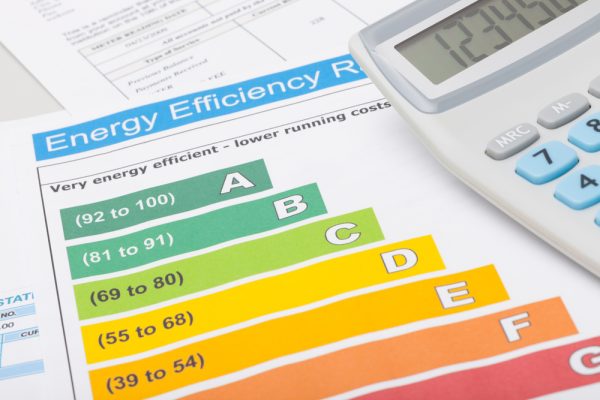 15 Feb
 Every business recognise the importance of evaluating its overhead expenses on a regular basis and one effective way for reducing business energy costs is to look at your business electricity rates, energy consumption and improve the overall energy efficiency.
However, this is easier said than done because the market is a competitive one with lots of business energy suppliers offering deals that suit the business’s size and annual energy usage. It is crucial to compare the available rates from alternative energy suppliers.
Indeed, regardless of your business’s size, even a ‘one-man band’ operation should be able to find a new electricity supply and save several hundred pounds from their business electricity bill every year.
Obviously, small and medium-size firms will be able to save substantially more while very large business will be able to deal directly with a energy supplier and not pay much more than wholesale rates. New business electricity supplier for your business
A new business electricity supplier for your business will need to understand what your average annual usage of electricity is in kilowatt-hours, expressed as kWh.
For example, a micro-business will be using no more than 10,000 kWh of electricity but a small business might be using between 10,000 and 30,000 kWh.
The business electricity supplier will be charging differing prices per kWh for a micro-business and small business with these prices expressed in pence – the larger the user, the cheaper this price will be.
There will also be a standing charge which is paid on a daily basis to help pay for the network that delivers the energy to your premises so a micro-business could. Calculating your business electricity bill
So, when calculating your business electricity bill you will need to be aware that you could find an energy supplier charging a lower average price per kilowatt hour but they might be charging more for your standing charge.
Essentially, this means you may not be making any saving whatsoever so you will need to understand these charges when discussing switching to a new business electricity supplier and confirming the new energy contract.
Before you do speak with a potential new business electricity supplier it might be a good idea to get an idea of what the market rates and your energy usage might be for your business and use this information when negotiating for a cheaper rates.
A good way to find an average market price for a firm of your size and annual energy usage is to use a business comparison website which will give you an indication that you can then use.
Alternatively, if you want to understand business electricity rates and find a cheaper energy supplier then the easiest and simplest way is to speak with the D-ENERGi team to see what they can offer you. We always available to provide advice and assistance on tailormade solutions, improve energy efficiency and reduce your business energy prices. Get a free quote from us or call us on 0800 781 7626 today for more information.
Read Article 14 Feb
 While it’s true that all small businesses should pay close attention to their energy consumption in order to keep on top of it and to ensure their energy costs do not exceed unmanageable highs, there are particular types of small businesses that use more energy than others. Which, we have highlighted in this blog and offered our expert advice for these specific businesses and industries. With our best tips on how to manage consumption with industry specific notes on cutting consumption.
Small restaurants and cafés
With such high intensity equipment, from industrial-sized ovens, to fridges, freezers, and food preparation tools, it is no surprise that restaurants and cafés are some of the highest energy consuming businesses. While chains and large restaurant businesses may have the cash flow to manage rising costs, smaller businesses such as family-owned restaurants and independent cafés may struggle.
And in recent years, examples of this have been seen throughout the country. With the industry taking a big hit due to the recent energy crisis. Walking through highstreets it is clear to see that many long-standing food businesses have taken a hit, either choosing to open only on weekends or closing indefinitely.
Tips to cut down energy consumption
In order to save money in areas of the business, where possible, following these tips will help cut down energy consumption: Clean and service all cooking and prep equipment regularly to ensure it is operating to its full potential.
Turn off the equipment when not in use. For example, your baking ovens. Once used to cook your fresh loaves and cakes in the early morning, switch them off and do not turn them back on again until the next day.
Keep your thermostat at a constant temperature. Even turning this down by 1 degree could save you hundreds in energy bills.
Ensure that any warm or hot equipment is kept away from cooling appliances like fridges. The warmth of the ovens and the heaters will only make the fridges work harder to stay cool.
Hair salons
Another industry that undoubtedly uses a lot of energy is the hair and beauty industry. With so many tools and a constant flow of customers through the door, the demand for electricity, especially, is high. And while long hours and busy periods means tools like hair dryers, straighteners, curling irons, are switched on and used frequently, some of the highest demand comes from the need for a constant supply of hot water. From washing hair to keeping towels fresh with on-site laundry facilities, all very important for making sure that not only is the service the best it can be, but industry standards are met.
Tips to cut energy costs
The following tips have the ability to help hair salon owners keep energy consumption down and cut energy costs: Consider investing in low-flow nozzles for your salon’s sinks and taps to minimise the amount of hot water used on a daily basis.
Avoid using space heaters, where possible. Research indicates that the use of space heaters and similar equipment contributes to some of the highest amounts of energy used in the service industry. If you’re struggling to keep your premises warm during winter months without a space heater, consider what may be causing this and carry out an energy audit of your salon.
Consider switching to low-power settings when operating hair tools, especially tools like hair dryers.
Avoid overloading electrical power sockets and extension cables. Only plug in the tools you need at each given time.
Boutique hotels and B&Bs
With operations and staff on-site from day to night, hotels and B&Bs are another of the highest energy consuming businesses in the UK. Having to provide a high level of service, making sure hot water is constantly available to guests, lighting can be used in all rooms, hot food can be served, and laundry facilities can be operated by staff. There’s so much that goes into running these businesses that requires a huge amount of electricity. One of the best, most cost-effective and simplest ways a hotel or B&B can cut their energy cost is to reduce the use of lighting and source natural light, where possible. This could simply mean removing old netted curtains or shades and allowing the sunlight to light communal areas and rooms that are not being used.
Set timers on HVAC units, and encourage guests to keep these at a regular temperature.
Switch to energy efficient devices in guest rooms.
Update old lighting with LED light bulbs.
Use motion sensor lighting in communal areas and bathrooms so guests can and staff do not leave lights on unnecessarily.
For more support and guidance to keep your small business’ energy costs down, consider contacting your business energy supplier and discuss your concerns. At D-ENERGi our friendly support team is always happy to help our business energy customers. Considering ways we can support your business, deciding upon payment plans or reviewing bills and usage. What’s more, if you would like greater control over your energy consumption, we are supporting small businesses with the smart meter roll out scheme, click here to find out more.
Contact D-ENERGi today for more information about your energy bills or to consider switching to us to lower your business energy bills.
Read Article 5 Feb
5 Feb The installation of new half hourly electricity meters for larger electricity users means business owners can save money on energy bills.
A half hourly electricity meter, also known as an HH meter or 00 meter is a special kind of meter that is connected to the business electricity supplier via a phone line.
This means the half hourly electricity meter can automatically send its meter readings every 30 minutes to the energy supplier – which is why it’s called a half hourly electricity meter.
This also means there’s no need for a business to take meter readings and then submit them and the regular updates of your energy usage also enable a potential supplier to see when your peak periods of use are and tailor their offering to meet your energy needs.
It’s this extra level of detail which should lead to substantial savings and lowering your energy bills.
Half hourly electricity meters being used by larger businesses
However, when we talk about half hourly electricity meters being used by larger businesses, we tend to mean large offices and factories; they tend to have an electricity usage of at least 100,000 kWh of electricity per year.
We should also point out that all large users of energy, including department stores and manufacturers, will have these half hourly meters installed because it’s now the mandatory requirement.
Indeed, these half hourly meters are sometimes referred to as P272 meters which are the relevant reference for those who want to find out more, and Ofgem is keen for more businesses to have smart meters installed.
While it’s easy to switch business electricity suppliers, the process for those who have half hourly suppliers is a little bit more complicated than switching a regular contract but there are experts in D-ENERGi available to help you do this.
The best half hourly electricity prices
This complexity should not put you from searching the market but you can contact us, provide the information and we can tailormade the best half hourly electricity prices for you. We offer fixed price contract so that you know precisely how much you will pay every month and can budget the energy costs accordingly. We also offer a choice of billing options that suit the needs of your business and can pay at your convenience.
The Account Manager in D-ENERGi will arrange for quotes ensuring you pay the lowest wholesale cost with excellent customer service. We will provide any additional information that can save your business money on energy bills. We then take care of the switchover process which can range from between four weeks and six weeks, depending on when your contract is due for renewal.
It’s also possible that by using half hourly meters, your business may be able to ‘group buy’ your electricity even if the meters are spread over various premises.
For more help and advice about how to save money with business half hourly electricity suppliers, then speak with the expert team at D-ENERGi.
For more energy saving tips and advice on how to improve the energy efficiency of your business premises, check out more of our D-ENERGi blogs.
Read Article
Get the Best Business Energy Quotes
Price Match Available: Our price matching team will provide you the most competitive business energy rates. We won’t just match your current energy quote – we’ll strive to beat it!
Join thousands of UK businesses that have already started saving on their business energy costs!
Sign Up For The Latest News and Insights on Market Trends
"*" indicates required fields