26 Apr
How Do Half-hourly Electricity Meters Benefit For Businesses?

Posted on Apr 26, 2024 by D-ENERGi
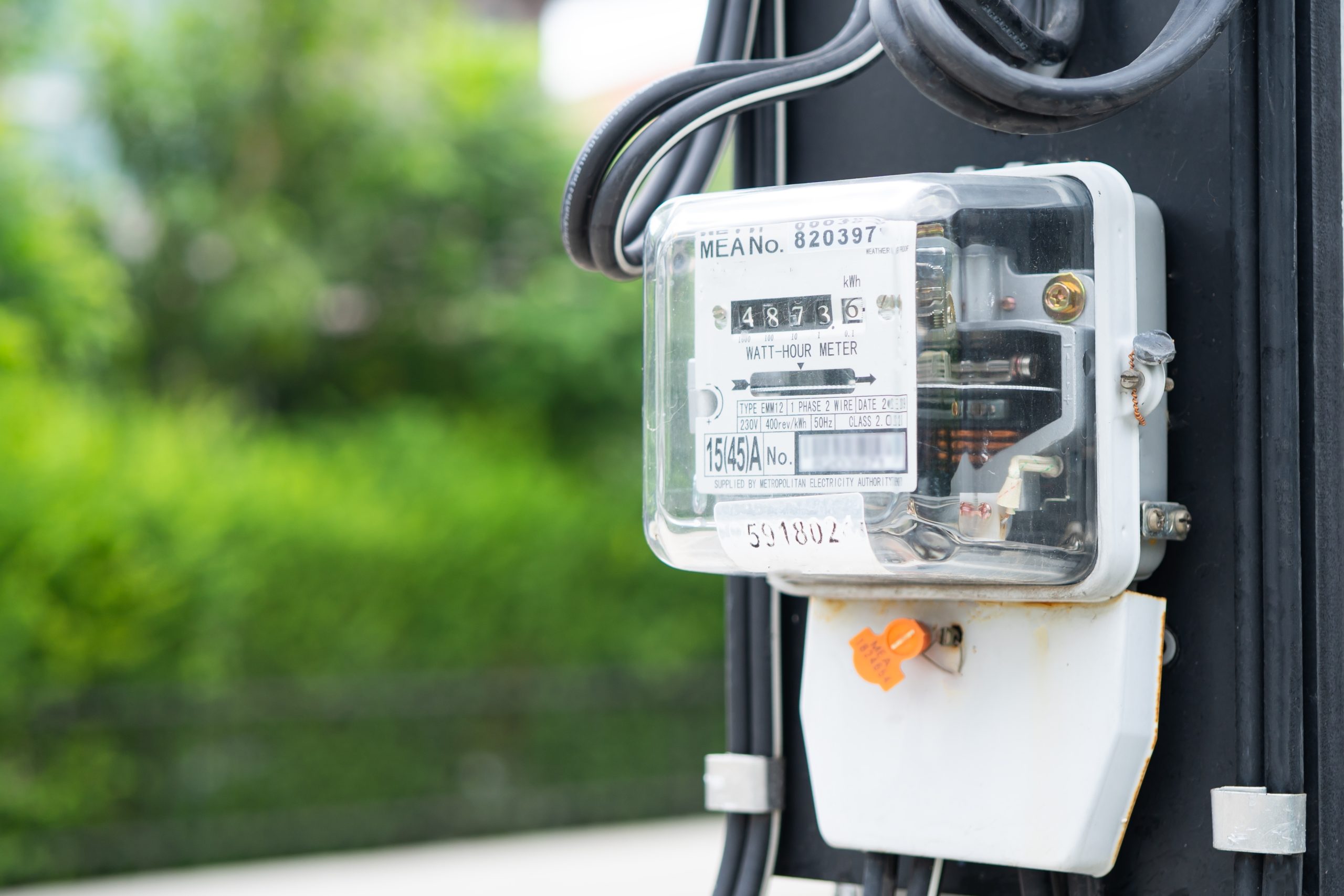
Half-hourly electricity meters are most often used by larger businesses and corporations, particularly by those who use a large amount of energy.
They are designed to provide more accurate bills helping to reduce the risk of businesses spending too much on energy without realising.
What is a half-hourly electricity meter
Using automatic meter reading technology a half-hourly electricity meter will provide automatic readings every half hour. As this is done automatically and is reported to your electricity supplier using a mobile signal or phone line, your bills no longer need to be estimated. Meaning, that as a business you will not have to take your own meter readings, nor will you experience over-estimated bills that require overspending on your electricity.
In fact, not only are half-hourly meters preferred by UK businesses, they are typically installed as a mandatory requirement for UK businesses with peak loads of more than 100,000 kWh of electricity per year.
The advantages of a half-hourly electricity meter
There are plenty of benefits that come with opting for half-hourly electricity meters. For businesses looking to save on their energy bills, this is the preferred option.
Not only do these meters ensure you do not overspend and you avoid estimated energy bills, but they also help you to better understand your energy consumption. Allowing you to review your company’s energy usage and reduce this where possible. For larger companies looking to improve their carbon footprint, half-hourly meter readings will allow you to take the first steps in reducing your carbon emissions. Setting goals and seeing a visible reduction in the amount of energy you use will be easy with the data provided by a half-hourly meter.
Other advantages of using a half-hourly meter for your business energy include, being able to predict your energy usage and experience more tailored tariffs from your energy supplier.
Save your energy bills
At D-ENERGi, we offer half-hourly meters to businesses across the UK. We currently supply hundreds of half-hourly meters to sites up and down the country. With customers benefiting from more accurate energy bills, data to review their energy usage, and significant saving on their energy bills.
With our experience working with UK businesses and supplying business energy to a wide range of businesses, we are well equipped to deal with a vast array of customer requirements. This includes increasing your capacity or helping you with Meter Operator Agreements.
At D-ENERGi, all our energy business customers get their own dedicated account manager. They are able to help you with any requirements or enquiries promptly and provide the best half-hourly electricity prices for you. We ensure that all calls will be answered within five rings or less. Get a quick quote from our friendly team and start saving your energy costs today.
While it may sound like an obscure piece of business regulation, understanding what P272 means is important for all organisations.
That’s because it is a regulation from the energy industry watchdog OFGEM which, in October 2014, stipulated that all organisations with non-half-hourly profile class electricity meters would be migrated to the energy market’s half hourly meters.
This means that the difference between the two environments will now be leveled out and, more importantly, will see firms and organisations being able to access cheaper electricity bills since their energy suppliers will be able to define more clearly not only how much energy an organisation is using but also when they are using it.
The extra information means the energy supplier could move their customers to lower tariffs so they save money.
In addition, they may even encourage an organisation to use electricity when it’s cheaper in off-peak periods to help with energy demand and the firm will then enjoy lower bills as a result.
All firms that had a non-half-hour electricity meter
Essentially, all firms that had a non-half-hourly electricity meters, known as NHH, will have gone through, or will need to go through, the switch over to a half hourly settlement.
The word settlement is used to determine how much electricity an organisation has used over a given period.
For those organisations with a meter in the ‘Profile Class 05-08’ – the definition of the meter is on the organisation’s electricity bill and meter itself – will automatically send the actual energy usage for the previous half-hour to the energy supplier.
One reason for this is that Ofgem says that organisations will be able to move their electricity demand away from the dearer peak periods and onto the cheaper periods or find a supplier who better meets their needs.
This not only helps the energy market but it also helps the National Grid forecast more efficiently when demand for energy will increase.
Switchover process for the implementation of P272
The switchover process for the implementation of P272 began in November 2015 so that all of the relevant metering systems in the country will have switched across to the half hourly market by April this year.
Obviously, this timescale means that some business sites had to implement the meter switchover much earlier than others did but everyone will need to have the new meters in place by the April deadline.
For those firms or organisations that have not been contacted or are unsure whether they are on the correct metering system, then they need to act promptly.
The best way of doing this is to contact the experts at D-Energi and they will be able to help answer any questions.
More importantly, should the organisation need to switch over then this can be arranged quickly and efficiently by the helpful advisers at D-Energi.
One of the main reasons given for organisations not switching energy suppliers is they claim not to have the time to fully research the market for a new supplier – this is where experts in the market come into their own and help firms save time doing so.
Electricity meter in the ‘Profile Class 05 to 08’
Indeed, it’s crucial that all businesses now have their electricity meter in the ‘Profile Class 05 to 08’ range so they have switched to a half hourly billing basis.
If not, their energy supplier must install a new meter or help with the switch-over by the deadline.
The result is that businesses will get more accurate electricity bills which means they should see a fall in their overheads but other organisations may see a rise in their bills.
The P272 also encourages firms to introduce energy saving ideas such as switching off electric lights in rooms that are not being occupied and other efficiencies.
The team at D-Energi can help
Again, the team at D-Energi can help with advice on this subject with ideas that work and will save the company money.
By shopping around, the organisation will be able to gain a better energy deal because a potential new supplier will be able to see how much the organisation is using in energy in clear detail and, more importantly, when they are using it.
It’s important to appreciate that the new changes only apply to organisations and not to domestic consumers and every business using electricity will be affected.
Under the new rules, it simply is not possible for any organisation to remain on their non-half hourly settlement and they will need an advanced meter installed.
Another reason for OFGEM to arrange for the P272 switch to half hourly metering is for businesses to appreciate how much they are spending on energy and look to switch suppliers so the idea is to create competition within the industry.
With greater competition for company, business means organisations can access lower tariffs more easily and reduce their overheads as a result.
For more help and information about understanding P272 and how an organisation can switch energy suppliers or find a better tariff, then contact the experts at D-Energi.
Read Article It’s taken more than six years to come to fruition, but the P272 regulations are now in force but have your firm taken the steps to comply with it?
You could be forgiven as a business owner for not knowing what the P272 regulations mean but every business with an energy meter in the 5 – 8 profile class must now have moved to a half hourly (HH) meter.
This is because energy suppliers with customers within the profile bracket must now settle with them on a half hourly basis.
The regulation to switch over the meters was first published in 2011 and since April 2014 all meters being installed must be advanced enough to be capable of remotely recording their meter readings on a half hourly basis.
Despite this, not every meter has the HH data available for the firm’s settlement purposes so many have found themselves having to rely on older manual meter readings.
However, from April 1, it is now the law for energy suppliers to settle with all of their customers with a meter in the profile class 5 – 8 on a half hourly basis.
Up to the supplier to install the correct meter
This means it is up to the supplier to install the correct meter though it’s always worthwhile for a business owner to check that this has been done and they are being billed correctly.
Some people in the industry may be wondering why there has been so much upheaval but there are several reasons for doing so.
The main one is that the business will receive more accurate bills because the supplier will receive a meter reading every half-hour.
This is done automatically and the business will be able to see when their energy usage is and whether they could move to an off-peak tariff to save money.
The data provided from HH metres is also crucial should the business be looking to switch energy suppliers since they will have accurate information about their energy needs.
In exchange, a potential new energy supplier can then analyse that data and offer a bespoke tariff that will better meet the firm’s needs.
This is all part of the government’s aim to create competition within the marketplace believing that this will lead to lower prices.
Potential business energy suppliers entering the market
Indeed, there has been a big growth in the number of potential business energy suppliers entering the market with a range of better deals on tariffs but also better customer service.
While many firms will stick with one of the ‘Big Six’ suppliers, they should check regularly whether there are cheaper deals available.
That’s because a firm or organisation will be obliged to keep their overheads in check and reduce outgoings where necessary and one effect of encouraging firms to switch energy suppliers is to use the data from a P272 meter to save substantial amounts of money.
These savings could range in value and the size of the firm but could be from several hundred pounds to thousands of pounds. This means profitability will be boosted as well.
Another big attraction for the P27 to regulation is that a firm with several premises could if they are large enough energy users, get one invoice covering all of their premises rather than several invoices to deal with.
Also, with the growing popularity of smart meters, it would be fair to say that smaller firms and organisations will also be required to move to HH metres at some point in the future; this is an issue that the regulator Ofgem is looking at currently.
The potential for accessing lower energy bills has prompted one of the big energy suppliers to urge all firms to review their current contract supply.
The P272 regulations have come into force
They made the announcement after the P272 regulations had come into force and said larger firms had enjoyed the benefits of having HH bills – the data had given them ‘deeper insights’ into their energy usage.
The call comes after the energy generators warned that firms could face dearer costs at peak time – which presents them with the opportunity to control costs.
It appears that at some point Ofgem will bring in steeper charges for these peak periods to help spread demand, particularly over winter.
The energy supplier says that one reason for this is the move towards a greater reliance on renewable energy sources which are more difficult to manage and operate.
By preparing now and understanding how the HH meters work to the firm’s benefit means they can keep ahead of the rises by planning and negotiating effectively with a cheaper energy supplier for lower bills.
For help and advice about the P272 regulation, contact the experts at D-Energi who will be able to explain more.
Read Article